A busy week researching the first place setting for my latest murder mystery and current work in progress. Any guesses where in the UK this is?
Clue: Another nod to my East Anglian heritage.
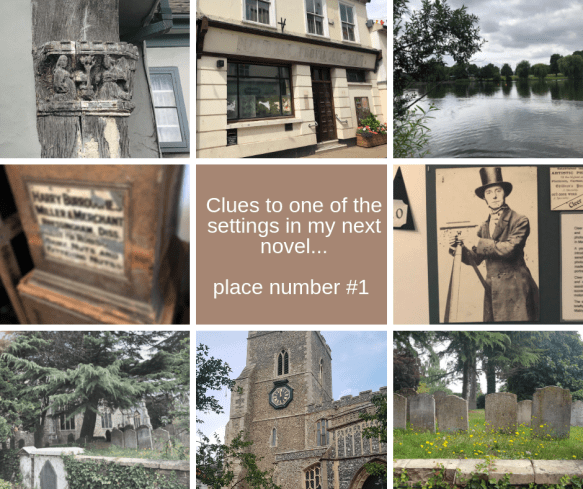
A busy week researching the first place setting for my latest murder mystery and current work in progress. Any guesses where in the UK this is?
Clue: Another nod to my East Anglian heritage.
 Suffolk is a glorious place graced with rolling hills, salt marshes and sandy beaches. Charming villages and market towns lie scattered through the countryside while bustling seaside ports adorn the coast. Steeped in history, Suffolk has grown elegantly into the 20th century with towns like Bury Saint Edmunds enjoying the historic Abbey grounds as they blend harmoniously with sympathetically built shopping complexes and other modern structures. The Suffolk landscape is varied and naturally inspirational for writers. At least, it was for me.
My books are usually set in Suffolk. Vote for Murder features both Stonham Aspall and Christchurch Park in Ipswich. The Fressingfield Witch is the first of the Lawrence Harpham Murder Mysteries. Lawrence lives and works at The Buttermarket in Bury Saint Edmunds, where the book begins. Most of the book is set in the village of Fressingfield as the title implies. The second Lawrence Harpham book, The Ripper Deception sees a location change with Lawrence investigating in London and Brighton. Even so, much of the book involves Bury Saint Edmunds, Chelmondiston, and the delights of Pin Mill.

The choice of Suffolk as a setting for my books puts me in excellent company. There are many talented Suffolk writers, who will form the subject of a future blog, but this is a piece about books set in Suffolk locations, regardless of heritage.
1. The Death of Lucy Kyte – Nicola Upson. I once met Nicola at a crime festival and should have told her that The Death of Lucy  Kyte inspired my first book. I have always been fascinated by true crime and mystery books are my favourite genre. With East Anglian heritage and a love of history, this Suffolk mystery was always going to please. The fifth of the Josephine Tey novels, The Death of Lucy Kyte centres around the infamous Red Barn Murder in the village of Polstead where Maria Marten died. It was a fabulous read that I can highly recommend.
2. The Town House – Nora Lofts. Set in Bury Saint Edmunds and featuring 14th-century blacksmith, Martin Reed, The Town House is the first of a Suffolk trilogy. Embarrassingly, I haven’t read anything by by Nora Lofts but The Town House will be going straight to the top of my TBR pile.
3. We Didn’t Mean to go to Sea – Arthur Ransome. An enchanting children’s adventure set at Pin Mill on the banks of the River Orwell. I have read (and still own) the Swallows and Amazon’s books and have spent many happy moments on the Shotley Peninsula.
4. A Warning to the Curious – M R James. I haven’t read this yet, but I will. Set in the fictional town of Seaburgh, this short ghost story is reputedly dripping with atmosphere and supernatural tension. Seaburgh is evidently recognisable as Aldeburgh, and the author has taken great pains to describe his surroundings.
5. Children of Men – P D James. “…Early this morning, three minutes after midnight, the last human to be born on earth was killed in a pub brawl”. So begins the compelling opening to a book which later became a movie. I watched the film a few years ago with no idea of the Southwold setting. A dystopian book about the effects of male infertility, the premise of the novel is fascinating and terrifying in equal measures. It is quite a departure from the author’s Adam Dalgleish novels. 
6. Gallowglass – Ruth Rendell writing as Barbara Vine. No Suffolk book list would be complete without the inclusion of Ruth Rendell who not only lived in Suffolk but set many of her books within its varied landscapes. Psychological mystery thriller Gallowglass features the town of Sudbury, and this book will also be joining my TBR list.


It’s mid-October and the clocks go back next week. Days are shorter, leaves are turning golden brown and the air is crisper as Autumn melds into winter. Frightmare returns to Over with scary rides and rows of bloated pumpkins and thoughts turn inevitably to Halloween. To ghosts, witches and undead things. Like the ghost of St Anne’s, Cheltenham’s most investigated haunting.
My new book is almost written. Set in Victorian England, it portrays the Victorian fascination with all things supernatural. And it was during Queen Victoria’s reign in 1860 that St Anne’s was constructed. Located on the corner of Pittville Circus Road, St Anne’s was a grand family residence set in extensive grounds. It had a sweeping carriage drive, 14 bedrooms, stabling for three horses and a gardener’s cottage.
The first occupants were Henry Swinhoe and his wife Elizabeth. Henry, born in Calcutta, was the son of a solicitor. He purchased the property from new and named it Garden Reach.
Rose Despard and her family moved into St Anne’s in 1882. Rose lived there with her father, her invalid mother and several siblings. Ten months after moving in, Rose saw the ghost for the first time. She described it as an apparition of a tall lady dressed in black widow’s weeds wearing a bonnet with a veil. The woman clutched a handkerchief to her face concealing her features. The ghost appeared many times over the years. Her footsteps were described as light, like ‘a person walking softly with thin boots on.’
Rose knew Frederick Myers, a founder member of the Society for Psychical Research. Myers investigated the haunting obtaining statements from witnesses including family, friends and servants. The report of the ghost gained serious credibility.
Rose’s account of the haunting appeared in the 1892 journal of the SPR. She identified the ghost as that of Imogen Swinhoe, second wife of the original owner. Rose’s investigations revealed that Swinhoe had turned to alcohol after the demise of his first wife. His new wife hoped to cure him of his intemperate habits but ended up becoming a drinker herself. According to rumour, Swinhoe had a special box constructed containing his first wife’s jewellery. The box was hidden under the floorboards in the front sitting room. Henry intended to keep the jewels until his children were of age. They would then receive them as an inheritance. Imogen disapproved and was critical of the way the children were being raised. The marriage became strained. Drunken quarrels ensued, and they separated a few months before Henry died.
St Anne’s or Garden House as it was called in her lifetime held awful memories for Imogen. It is hard to imagine why her apparition would return. After her divorce, she fled to Bristol. Her remains were returned to Cheltenham and she was interred at Holy Trinity with her mother.
Newspaper reports show that the Swinhoe’s marriage had broken down irretrievably by 1875. An article in the Cheltenham Mercury in April publicly declared that Henry Swinhoe would not be responsible for any of his wife’s debts.
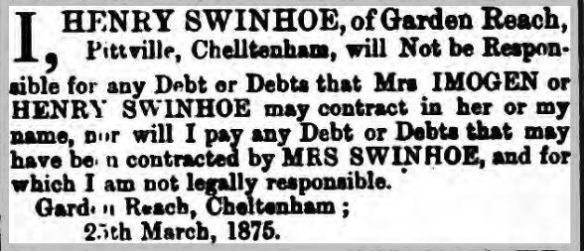
Soon after, he instigated divorce proceedings. Henry’s divorce petition is available on the internet. It makes uncomfortable reading. He accused Imogen of gross and continual habits of drunkenness and violent and indecent language. On 22nd December 1874, Imogen allegedly threw a chair at him. On other occasions, she threw different articles of furniture. Henry claimed that her behaviour enfeebled him and was injurious to his health. A further incident occurred on the 5th of April 1875 when Imogen accused Henry of infidelity. She stated that he fathered an illegitimate child by their housemaid, Elizabeth Townsend. Henry’s children and the servants were witnesses to this accusation. Elizabeth was so distressed that she bought an action for damages.
The account in the divorce petition implies that Imogen was violent and unstable. But were things as one-sided as the evidence suggests? Local newspapers show otherwise. In 1874 Henry’s name appeared in the newspaper coverage of a case of slander. It involved the local milkman who had been wrongly accused of kicking a neighbour’s dog. Swinhoe had responded to the unproven allegation by taking his custom away. The judge called this action ‘foolish’ in his summing up. The Cheltenham Chronicle of 16th November 1875 covers an assault by errand boy Frederick Crisp. The assault was on Charlotte Wittington, a servant of Henry Swinhoe. It emerged, during the trial, that Swinhoe had threatened to shoot the boy. Within a week of this article, Henry Swinhoe appeared in court. Henry had an abhorrence of perambulators. He had pushed his stick into the side wheel of Alice’s Speechy’s pram to overturn it into the gutter. But for the prompt action of Alice Speechy’s nurse, the child could have fallen from the pram. Henry Swinhoe was found guilty and fined.
Both Henry and Imogen were obstreperous. But why? Henry’s ill-temper was borne of grief. His first wife died in childbirth. A poignant acknowledgement of his still-born son’s birth in August 1866 appeared in the papers. Henry became a widower with five young children. His marriage to Imogen in 1870 was likely made to provide them with a mother.
Imogen was the daughter of Major George Hutchins and his wife Catharine McEvoy. George died in 1844 and Imogen remained close to her mother. She was the sole executrix of Catharine’s will when she died in 1870. Catharine left a 7-bedroom property at 2 Blenheim Parade (off The Evesham Road). Henry let it in 1871 at a rent of £30.00 for the period from April to December, a far cry from today’s prices.

If not always cantankerous, Henry’s behaviour was far from gentlemanly. The incident with the pram could have resulted in serious injury, if not a loss of life. He was ill-tempered and unpleasant. The marriage was a disaster and it is likely that Imogen was unhappy from the outset. Turning to alcohol may have been the only way she could cope. There were faults on both sides.
But what of the ghost? Was it Imogen? Rose Despard thought so. Her research revealed no other candidates. The Swinhoe’s were the first owners of St Anne’s, constructed on the site of a market garden. Henry’s first wife died before him and never wore widow’s weeds. The next owner was Benjamin Littlewood, a Justice of the Peace. He purchased the property, which he renamed Pittville Hall, in 1879. Benjamin died six months later in the sitting room where Henry Swinhoe had hidden the jewels. This ruled out the possibility of Littlewood’s wife being the ghost. The house lay empty for some time before the Despard’s arrived and with them the beginnings of the haunting.
Most hauntings occurred in 1884, but sightings have continued as late as 1985. The ghost is usually seen in the house, but also in the gardens, in Pittville Circus Road and in the grounds of the opposite property. The ghost, if one believes in such things, has ties to the property. In the absence of any other candidate, it ought to be Imogen. But there is another person with tenuous links to the house. A person who lived nearby as a widow for many years, and who cared for Imogen until the end. Catharine Hutchins died the year after her daughter married Henry Swinhoe. She may have seen cracks in the marriage before she passed away. It is not difficult to imagine her desire to comfort her troubled youngest daughter. To visualise her lingering near the property where her daughter suffered for so long…
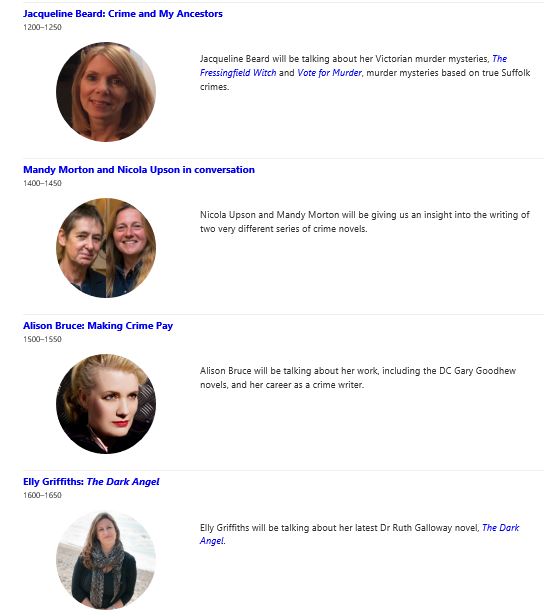
Suffolk’s newest Crime Festival – Stowmarket Library 27 – 30 April 2018
Tickets on sale from Stowmarket Library and Mid Suffolk Tourist Information Centre from 6 March. £5 per author talk or £20 for all six.

Fiction genres are malleable. Books move in and out of popularity and often straddle several genres. Genealogy fiction is a sub-genre, usually combining murder mystery and crime with genealogical research. But what defines genealogy fiction? Must the protagonist be a genealogist to qualify?
My first foray into genealogy fiction was The Blood Detective by Dan Waddell. I liked it so much I immediately bought Blood Atonement and finished it within days. As a seasoned genealogist, I was hooked. Before long, I had graduated to Steve Robinson and his Jefferson Tayte mysteries and Nathan Dylan Goodwin’s forensic genealogist Morton Farrier. I am currently reading Goodwin’s The Suffragette’s Secret and very good it is too. Top of my genealogy fiction ‘to read’ list is Stephen Molyneau’s The Marriage Certificate and M J Lee’s The Irish Inheritance when time allows.
When I wrote Vote for Murder, it was inevitably going to have a genealogical theme being based on two of my ancestors, one a suffragette and one a convicted poisoner. The Fressingfield Witch is also based on my ancestry and was inspired by a public accusation of witchcraft made against a distant relative. The protagonist in Vote for Murder is an independent young suffragette who unravels a murder using a diary and family records. Private Investigator Lawrence Harpham uses parish and probate records to unmask the murderer in The Fressingfield Witch, but neither Lawrence nor suffragette, Louisa are genealogists. Are the books then worthy of the sub-genre classification of genealogy fiction? And does it matter that they are both set in Victorian times where the opportunity to use family history records was more limited? One never wants to disappoint an audience so getting the genre right is important. But I believe that both books nestle well into the genealogy fiction genre, even if they are not quite the same as their better-known counterparts.
The below is a list of well-known genealogy fiction writers. Some I have yet to read, but I heartily recommend the top three. Enjoy.
Dan Waddell – The Blood Detective & Blood Atonement
Steve Robinson – Any of his Jefferson Tayte offerings
Nathan Dylan Goodwin – Any Morton Farrier, forensic genealogist
M K Jones – The Genealogy Detectives
Geraldine Wall – File under Fear/Family/Fidelity
Stephen Molyneaux – The Marriage Certificate
M J Lee – The Jayne Sinclair Genealogical Mysteries
John Nixon – Madeleine Porter Mysteries
Beryl Taylor – Therese
 It’s the first day of a week away from work. The weather is disgusting. My dog is sullenly pacing round the house eyeing me with disapproval. It’s so foul outside, that today we are going nowhere.
I like a walk. It keeps the dog happy and my Fitbit from nagging. Today my Fitbit sits redundantly on my arm while I contemplate the pile of books I have been looking forward to reading, but have lain gathering dust on my bedside table while other things take priority.
The Fressingfield Witch, is one of those other things. My latest novel is a Victorian murder mystery set in Suffolk and based on a real news item that hit the local headlines in 1890. It was an allegation of witchcraft. The news item was only short, but had an immediate impact on me. For starters, it involved one of my very distant relatives. That’s always a good lure to a genealogist. And it involved death and witchcraft, so my inner writer pricked up her ears. Before I knew it, we had conjured up a novel from this tiny eleven-lined piece of inspiration.
I’ve taken a risk with this book. The real village of Fressingfield has been populated with actual people from the 1891 census. This will be like marmite to some. They will either appreciate the idea of real people living on in print, or they will disapprove of the merging together of fact and fiction. I hope it is the former.
The final cover and finished drafts are with Publishnation and should be ready for purchase very soon. All of which gives me the rest of the week to catch up with a little light reading of my own. Unless the rain lifts and the dog demands a walk. Doing a little rain dance now…..

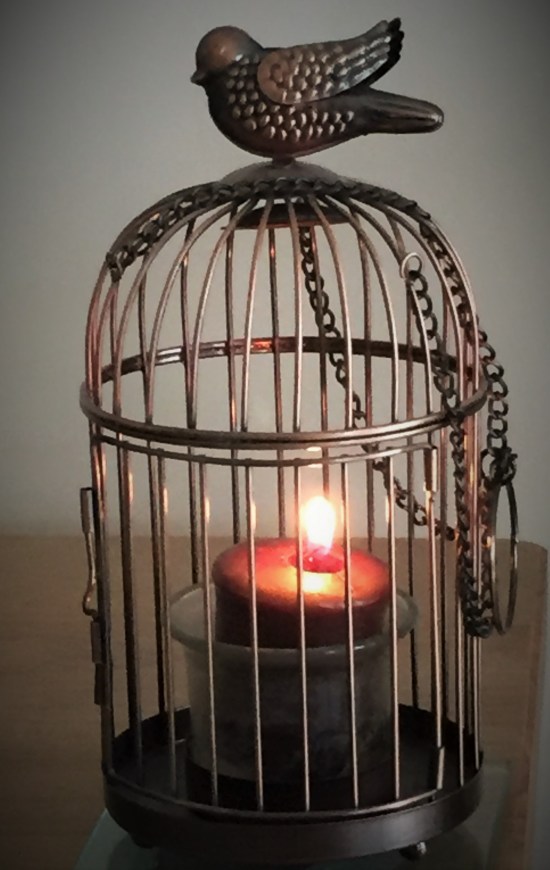
 My new book has been plotted, written and is now under going a rigorous edit. Set in the 1890’s in an East Anglian village, it combines fact and fiction with a large dose of mystery and a generous sprinkling of genealogy. This illustration gives a teaser of the back theme.
TFW (working title) will be published later on this year. In the meantime, the kindle version of Vote for Murder is on sale in the UK at just 99p. Suffragettes, secrets and sleuthing – what’s not to like…
Download Vote For Murder Amazon Kindle here
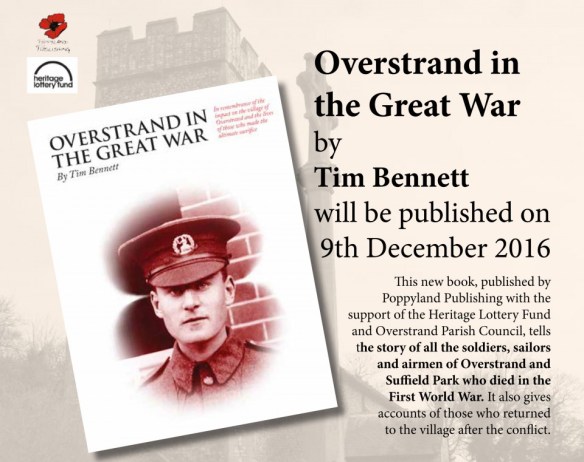
This new book, published by Poppyland Publishing with the support of the Heritage Lottery Fund and Overstrand Parish Council, tells the story of all the soldiers, sailors and airmen of Overstrand and Suffield Park who died in the First World War. It also gives accounts of those who returned to the village after the conflict.
With 208 pages & colour throughout, ‘Overstrand in the Great War’ provides a fitting tribute to the young – and sometimes not so young – men and women of Overstrand and Suffield Park from a century ago. General the Lord Dannatt kindly contributes a foreword and puts their sacrifice and service into the context of the continuing commitment required of our armed services.
Author – Tim Bennett
Military Research – Martin Dennis
Autumn has landed with a vengeance in my little corner of Gloucestershire. In true Hygge fashion, I’m snuggled on the couch covered with a wool blanket, sipping a hot drink and letting the smell of cappuccino truffle waft around the room from a burning candle. The research for my next novel is almost finished; just the small matter of writing it now. Set once again in Victorian England, the new book mixes true crime and historical fiction in the blended genre of faction. Or rather it will once I’ve removed myself from the comfort of the sofa and away from cosy distractions.
In the meantime, Vote for Murder is currently free on Amazon Kindle until Wednesday 21st September. Click this link for your copy.
 I’m not a full time writer. Like many others, I have a day job; to be completely accurate, I have two. So holiday time is valuable and self, husband, son and aged border terrier were looking forward to a fortnight off in the splendid scenery of Northumberland.
My husband has a thing about castles. Something to do with his love of Bernard Cornwell novels, I think. He was desperate to visit the Holy Island and couldn’t wait to get inside a castle or two. It was going to be a fabulous week with plenty of time to develop the plot for my next novel. Even my son was resigned to the lack of Wi-Fi and happy to be reading and writing instead.
Saturday dawned and we set off for Northumberland via Kendall, arriving in Beautiful Belford late Saturday afternoon. We duly unpacked, scoped out the local area and found a very nice hotel which served mini bottles of prosecco; all seemed right with the world.
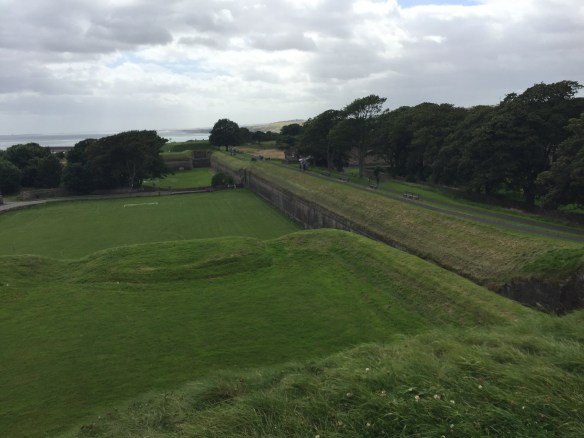
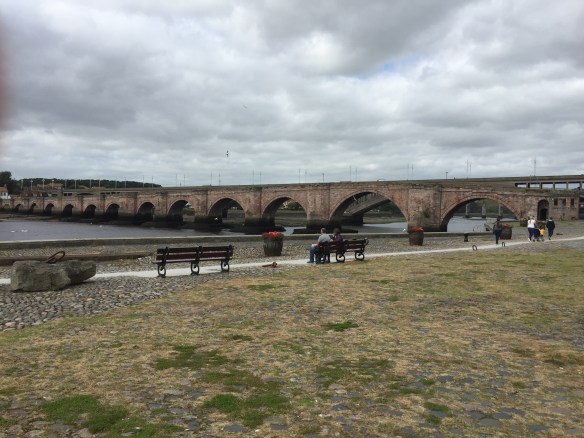
Sadly, there was a lot less of the world by Sunday, according to my husband’s left eye. We decided to drive up the coast to the historic town of Berwick on Tweed and spent a pleasant morning meandering around the ruins. As we drove further north to the Scottish town of Eyemouth, hubby began to complain about his vision. It felt like there was a contact lens stuck in his eye, he said, and his vision was a little blurry. He inspected the eye in the mirror, saw nothing to concern himself and decided to sleep on it hoping it would improve by morning. So we went back to our holiday let, cooked a meal & settled down for the evening.
By the next morning, my husband’s left eye was behaving very badly indeed. He could only see a small semi-circle of light and was sufficiently concerned to visit the local chemist and ask for directions to the nearest optician. There were two within a 15-mile radius, so he chose Specsavers in Berwick. It turned out to be a wise choice. They were extremely accommodating, took his problem seriously and rearranged their diary so he could attend that morning. So off we trekked to Berwick again, hubby in attendance at Specsavers while my son and I walked the dog around the ruins for the second time in 24 hours.
Long story short, hubby was diagnosed with a detached retina and macular. He returned to the car, ashen, clutching a referral note to Newcastle Royal Victoria Infirmary for that afternoon. Despite the diagnosis, he insisted on driving as he doesn’t like me driving his car and I don’t like it much either as it doesn’t have a real handbrake. Two hours later the four of us were at the top of a multi-storey at the hospital. Son and dog remained in the car while hubby and I booked him into the eye clinic where there was a 2 hour wait. I spent the next 2 hours flitting between husband, son and dog and taking son and dog to find a car charger as all the phones were getting low and we had no idea whether husband would be admitted or not.
In the end, it was not. The operation was urgent and could have been carried out at Newcastle but with the follow up care, it was deemed better to return to Cheltenham and have the operation there. This came as something of a relief as all I could think about during the wait was how on earth I was going to get his car down nine car parking ramps when I couldn’t use the brake. It was clearly on his mind too as he point-blank refused to let me try.
Going back to Cheltenham was a no-brainer. The operation was urgent and we decided to drive through the night and take his referral letter to Cheltenham General hospital first thing the next day. And when I say we, I mean me. Husband finally, and reluctantly, agreed I should drive as the eye drops were disturbing his remaining vision and he knew he wouldn’t be able to see when it got dark.
It’s fair to say that Hubby does not make a good passenger. Having driven straight back to Belford, packed and departed, I might have been concerned about staying awake, were it not for the fact that he shouted at me almost the entire way home. The conversations, of which there were many, went along these lines.
Him – “You should get into the left lane here.”
Me – “But the satnav says stay in the middle lane.”
Him – “No, the sign says go left.”
Me – “The satnav definitely wants me to stay in this lane.”
Him – “GO LEFT NOW!”
Me – “We’re on the wrong road.”
Him – “Well don’t listen to me. You know I can’t see properly!
And so on, ad nauseam, all the way home.
Fortunately, we arrived home in one piece, slept for a few hours and reported to the hospital the next day. The staff at Cheltenham General were fantastic, took it all very seriously and he was operated on the following day. Three weeks later and things are going well. He can already see colours and shapes and his vision improves daily.
On the minus side, we only spent two days in Northumberland of which one of those was taken up dealing with medical matters. The closest we got to a castle was driving past glorious Bamburgh Castle & we were compelled to cancel our boat trip to the Holy Island (they would have taken the dog too). But it’s a small price to pay to ensure the restoration of hubby’s sight and we appreciate how lucky he was to be seen by such professional medical staff in Berwick, Newcastle & Cheltenham. We will return to Northumberland again one day and the trip to Holy Island will take place before anything else!
 Jacqueline Beard Writer