 I’m often asked where the inspiration for my books comes from, and it’s not difficult to answer. The antics of my ancestors inspire me. Other people have illustrious forebears. Mine are mad, bad and often dangerous to know. My family tree has over fifty-five thousand individuals, and it’s still growing, so there’s plenty to go at.
My first book, Vote for Murder, was inspired by the execution of Mary Emily Cage in 1851. Mary was hanged after poisoning her husband James with arsenic, and she may have killed several of her children. An admitted sinner and adulteress, Mary denied murdering her husband and went to her death without confessing. She was condemned by the press who reported every detail of her misconduct without any consideration for her circumstances. But Mary was a victim of domestic abuse. James Cage had already been imprisoned for his ill-treatment of her while under the influence of alcohol. The family were destitute and in desperate need. In another century, there would have been more sympathy for her situation.
 Around the time that I discovered my relationship (through marriage) to Mary Cage, I also found several suffragists in my family tree. They were peaceful activists, and their absence from the 1911 census suggests that they were at the census evasion night in The Old Museum, Ipswich organised by prominent Suffolk suffragette Constance Andrews. Both stories fascinated me, and inspired my first adult fiction novel. Naturally, my protagonist in Vote for Murder is a suffragist, and her story weaves together with that of Mary’s to produce a murder mystery set in Victorian and Edwardian Suffolk.
After finishing Vote for Murder, I gave myself a year off without thinking too hard about writing, but my family tree kept growing, and skeleton’s continued to appear. I had long been fascinated by the genealogy of my East Anglian Corben family including the name variants Corbin and Corbyn. Having made a tenuous link back to Corbyn’s in the late 1400s, I found a more recent connection (again by marriage) to Mary Corbyn of Fressingfield. Mary was rumoured to be a witch. Now, an accusation of witchcraft was not unusual in the 1600s, but a rarity in the 1890s. The basis of the allegation was the death of Mary’s grandchild, which was reported in the press as follows:
Alleged Witchcraft in Suffolk. At an inquest held at Fressingfield on Thursday by Mr C W Chaston on the body of a child named Hammond aged 11, weeks, daughter of a labourer, the father and mother stated that they believed the death of the Child was due to the witchcraft of Mrs Corbyn, the Child’s step-grandmother. This woman died a few hours before the Child and stated that the Child would not live long after her. The Child was taken out, and the father stated that he saw smoke issue from its perambulator and that the Child died upon being taken home, the mother stating that it was hot and dry, and smelt of brimstone. The medical evidence went to show that death was due to shock caused by the external application of some irritant, and the jury, in returning a verdict in accordance with the medical evidence said there was not sufficient evidence to show the nature of the irritant. George Corbyn said he was of the opinion that his late wife had the powers of a witch, and he always tried to do what she wanted in consequence.
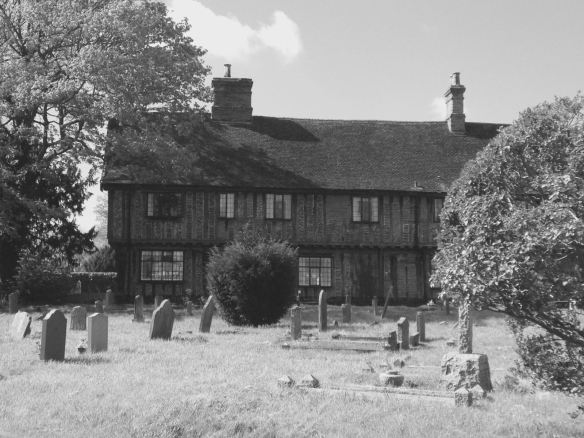 I couldn’t resist using this story as the starting point for the first of my Lawrence Harpham mystery novels, The Fressingfield Witch. A crime had occurred, but without evidence, there was no one to bring to justice. My book would have been very short, but for one thing. Fressingfield already had a witch.
 Faith Mills was a victim of witchcraft accusations from the Suffolk Witch Trials of the 1640s. She was one of the unfortunate women executed on the strength of allegations made by Matthew Hopkins and his Suffolk born colleague, John Stearne. The two men arrived in Fressingfield during the Witch Hunts and stoked up fear of the supernatural in the hope of personal gain. This genuine terror of witchcraft escalated in an atmosphere influenced by religion, politics and the civil war. The victims were mostly, though not always, women and they were exploited by Hopkins and Stearne who deliberately targeted the poor, vulnerable, marginalised or different.
Once again, my book combined stories set in two different eras, this time involving Private Investigator Lawrence Harpham and his business partner Violet Smith.
By the time I began writing the sequel, I was running out of interesting relatives and had started using historical newspapers as the basis for my stories. There is nothing quite as strange as real life, and I have found crimes covered in newspaper articles to be excellent sources of inspiration. The Ripper Deception, Book two in my series, was created from three separate newspaper stories. One featured a miser’s death; one involved a haunted rectory and the final report described the inquest of Frances Coles who may or may not have been a victim of Jack the Ripper. Together, these three true stories created an unusual twist on a common theme.
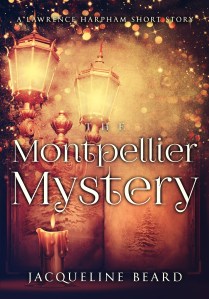
I have recently published a Christmas short story, The Montpellier Mystery, and the next full-length book in the Lawrence Harpham series, The Scole Confession, has just been released. Both books rely heavily on newspaper coverage of actual events. Both are set in recognisable English towns and those readers so inclined, can identify the real people who were involved in the accounts. If they look closely, they may even find them in their family trees!

Contact me on:
Twitter: @jacquibwriter
Facebook: https://www.facebook.com/LawrenceHarpham
Instagram: https://www.instagram.com/jacquib3333/
 It’s been a year of ups and downs – one where self-help books and gin seemed like the only answer. A year where insurmountable obstacles appeared from nowhere and navigating them became a way of life. Mum died unexpectedly in February, closely followed by my mother-in-law in law, and four weeks ago, I came within a whisker of losing Dad. Other people I know have been through worse during these uncertain and challenging months, and in many ways, it’s brought out the best in people. I’ve witnessed frequent and humbling acts of kindness.
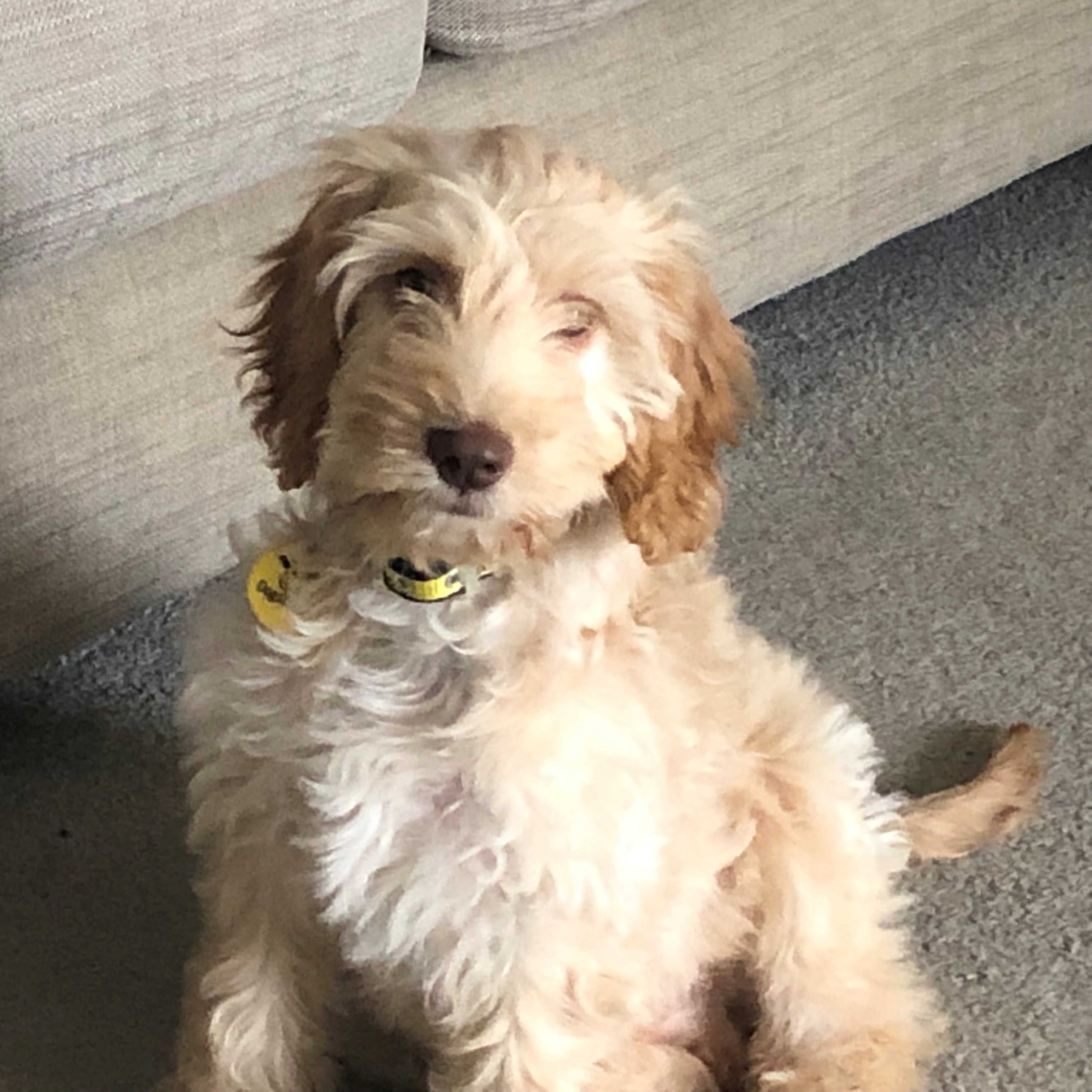
 In terms of dogs, the year started badly. My beloved border terrier passed away in his fifteenth year while I was in Suffolk – but this is not a sad tale. Toby had a happy life on the edge of the Cotswolds with more lovely walks than you can shake a stick at and a family who loved him. Though he hated most dogs (it’s a terrier thing), he developed a strong bond with a miniature schnauzer called Benson. They became ‘The Cone Brothers’ when coincidentally injured in the same week and made to wear the cones of shame.


 Suffolk is a glorious place graced with rolling hills, salt marshes and sandy beaches. Charming villages and market towns lie scattered through the countryside while bustling seaside ports adorn the coast. Steeped in history, Suffolk has grown elegantly into the 20th century with towns like Bury Saint Edmunds enjoying the historic Abbey grounds as they blend harmoniously with sympathetically built shopping complexes and other modern structures. The Suffolk landscape is varied and naturally inspirational for writers. At least, it was for me.


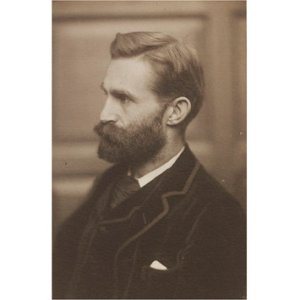

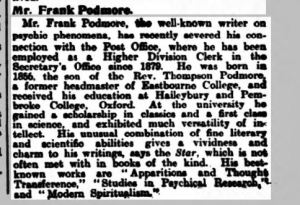
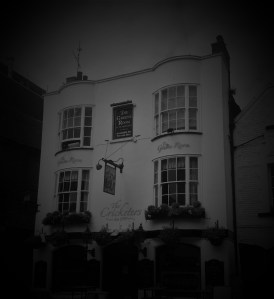 In June 1888 a tall, moustached man arrived at the Cricketers Inn, Black Lion Street, Brighton suffering from neurasthenia (intense fatigue). A holiday in the popular Sussex seaside resort must have seemed like the perfect antidote to his ailments. A student of the occult sciences, Roslyn Donston may well have occupied his convalescence in Brighton by furthering his knowledge of black magic and esoteric doctrines. Or, according to some, he may have been planning a series of murders in Whitechapel.
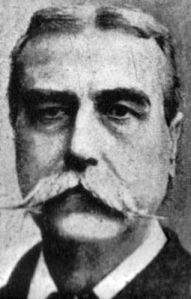 Was Donston Jack the Ripper? Well, if the recent DNA testing of Catherine Eddowes’ shawl is correct, then clearly not. However, several leading geneticists have cast doubt over the provenance and contamination of the shawl, and there are issues (which I don’t pretend to understand) regarding mitochondrial DNA. The identity of the Ripper is by no means solved, and probably never will be.
  On Friday 22nd June 1888 Edmund Gurney checked into the Royal Albion Hotel opposite the Aquarium on Brighton’s seafront. The hotel was an unusual choice for Mr Gurney. A frequent visitor to Brighton, he most commonly stayed in lodgings. Perhaps, this time, he craved the anonymity of a busy hotel. Gurney’s reason for being in Brighton was equally unclear. He had been summoned, by letter, but had not disclosed why, or by whom. His contact details were omitted from the hotel register, and he had no identification on his person, save for one unposted letter.
 Jacqueline Beard Writer