Pre-Order The Girl in Flat Three for 25% Off

Secure your paperback copy before release of The Girl in Flat Three, book one in the gripping psychological thriller by Jacqueline Beard. Use code SUMMER25 at checkout to receive 25% off the paperback when you pre-order from Waterstones.


📅 Offer valid until 31 July 2025 – don’t miss your chance to save on this unputdownable release. https://www.waterstones.com/book/the-girl-in-flat-three/jacqueline-beard/9781036703967

The Girl in Flat Three

A missing girl. An unsolved murder. A neighbour with something to hide.

Unemployed and adrift, Sass Denman never expected her life to unravel over a casual conversation. But when it leads her to the enigmatic private investigator Sean Tallis—whose methods are as unconventional as his obsession with lizards—Sass finds herself drawn into a case far more dangerous than she ever imagined. What begins as a search for a missing girl soon connects to a cold case that has haunted the Cotswolds for a decade. Is the infamous Skin Thief back? The deeper they dig, the more sinister the trail becomes—and all paths lead to Bosworth House, Sass’s own crumbling residence. Each flat hides secrets. Flat Four echoes with nightly arguments. A padlocked cellar door remains sealed. And behind Flat Three, something unspeakable has already happened.As suspicion tightens around her, Sass must confront the chilling possibility that a killer is living just a few steps away.

The Girl in Flat Three is the chilling first installment in the Denman & Tallis Cotswold Crime Thrillers series by Jacqueline Beard—perfect for fans of Ruth Ware, Claire Douglas, and Nicci French.

Trust no one. The killer is closer than you think.

⭐ Praise for the Denman & Tallis Cotswold Crime Thriller Series

★ ★ ★ ★ ★ “I was absolutely hooked from page one.”
★ ★ ★ ★ ★ “A gritty, page-turning read—I stayed up late to finish it.”
★ ★ ★ ★ ★ “Gripping and well thought out story.”
★ ★ ★ ★ ★ “I would have given this book 10 stars if I could.”
★ ★ ★ ★ ★ “Good psychological thriller, lots of twists and turns.”
★ ★ ★ ★ ★ “A truly gripping thriller!”

The Sinister Side of the Everyday

Ordinary life is endlessly fascinating, from the quiet hum of a communal meeting place to the clink of teacups in a village cafe or the ice cream van on a sleepy suburban street. These moments are so familiarly innocuous that we rarely stop to wonder what might lurk beneath them.

And that’s where the story begins.

As a crime and mystery writer, I find the most chilling tales don’t begin with bloodshed or bodies — they start with routine. With predictable lives, bordering on tedious, until something unravels. A misstep. A secret. A person who doesn’t quite belong. Or, in my book, The Girl In Flat Three, a smell that won’t go away. Suddenly, the cosy becomes claustrophobic. The familiar feels foreign. And the ordinary becomes the stage for something much darker.

This genre is sometimes called domestic noir, but isn’t it more appropriately named as the sinister ordinary? A genre that encourages the reader to look closer — to examine the kind neighbour, the spotless home, the polite hotel guest. To question the noises coming from the flat above? These aren’t gothic castles or abandoned warehouses. They are places we inhabit. And that’s what makes them dangerous.

Real suspense begins not in the extraordinary but in the almost possible. In the idea that the person who checks your fire alarms might plant something more lethal. That the inoffensive man in the supermarket queue isn’t browsing so much as stalking. It’s that sliver of doubt, once introduced, that swiftly spreads its tentacles.

I read and write in that moment — identifying the split second when everything shifts. A once locked door left ajar, a misplaced object that shouldn’t be there. A silence that lasts a little too long.

We live in a world built on habits and expectations. Most days follow a script. But it’s in the unscripted where that stories take shape.

So pay attention next time you’re in a hotel or walking down a familiar street. Notice the shadows. Watch for the hesitation in someone’s smile. The sinister doesn’t always arrive with a mask and knife held aloft. Sometimes, it wears a name badge and offers to change your towels.

The Devil comes to Bylands – Book Three in The Denman & Tallis Cotswold Crime Series coming later this year.

She’s Back! Constance Maxwell Returns in The Cheltenham Torso – Available for Pre-order Now

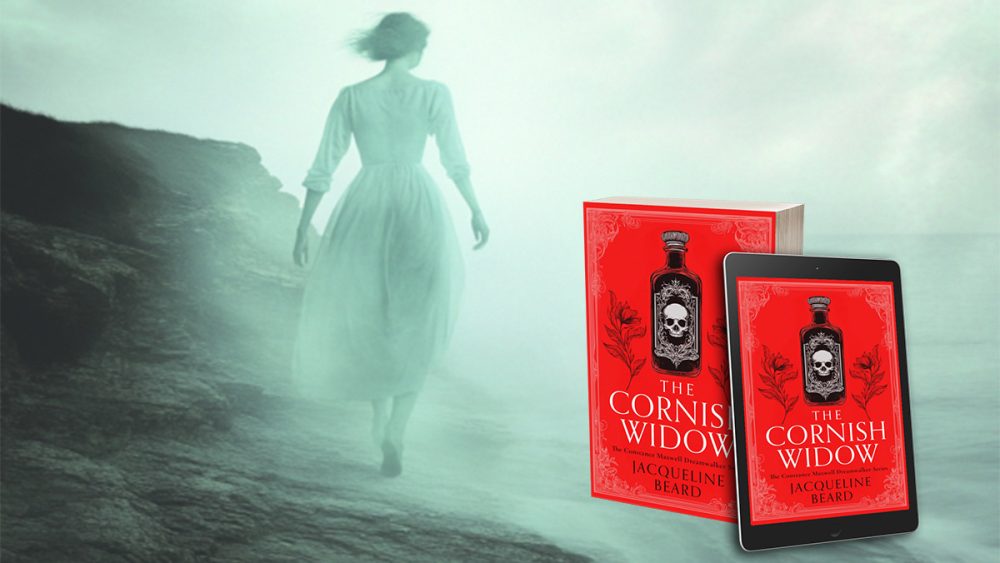
🌟  Constance Maxwell: The Dreamwalker Series 🌟

Step into a world where dreams and reality collide, where mysteries unravel in the most unexpected ways, and where one woman’s extraordinary gift takes her on adventures beyond imagination. Welcome to the Constance Maxwell Dreamwalker Series—a gripping blend of historical fiction, supernatural intrigue, and heart-pounding suspense.

📖 About the Series:
Constance Maxwell is no ordinary woman. With the unique ability to astral travel, she finds herself drawn into a web of secrets, danger, and otherworldly phenomena. From the sleepy streets of coastal Cornwall to the eerie landscapes of the dream realm, Constance’s journey is one of courage, discovery, and resilience. Each book, featuring historical true crimes, delves deeper into her mysterious origins, blending rich historical detail with spine-tingling twists that will keep you hooked from the first page to the last.

🔥 Latest Release: The Cheltenham Torso (Book 4)
The fourth instalment in the series, The Cheltenham Torso, launches on 26th February, and it’s Constance’s most thrilling adventure yet.

Grief-stricken after Vera’s death, Connie has left dreamwalking behind. But as World War II casts its shadow over England, secrets brew beneath the surface of sleepy Cornwall—and Crossley, the rogue occultist, has vanished into hiding.

When the psychic division recruits Crossley as a double agent, Cora spirits Connie away to Cheltenham. What begins as a refuge quickly spirals into danger, thrusting Connie into a web of intrigue and an unexpected murder mystery.

As Crossley resurfaces with plans to unleash his most audacious occult feat, Connie faces perilous choice. Can she unravel the truth behind the murder and stay one step ahead of Crossley’s sinister designs? And what of the enigmatic figure who has suddenly returned to her life—friend or foe?

✨ Why You’ll Love the Series:

  • A strong, relatable protagonist with a unique gift
  • A perfect blend of history, mystery, and the supernatural
  • Twists and turns that will keep you guessing until the very end
  • Rich, immersive storytelling that transports you to another time and place


Don’t miss the release of The Cheltenham Torso on 26th February. Whether you’re a longtime fan of Constance Maxwell or new to the series, this is the perfect time to dive into her world.

Suffolk Fiction

aldeburgh-PixabaySuffolk is a glorious place graced with rolling hills, salt marshes and sandy beaches. Charming villages and market towns lie scattered through the countryside while bustling seaside ports adorn the coast. Steeped in history, Suffolk has grown elegantly into the 20th century with towns like Bury Saint Edmunds enjoying the historic Abbey grounds as they blend harmoniously with sympathetically built shopping complexes and other modern structures. The Suffolk landscape is varied and naturally inspirational for writers. At least, it was for me.

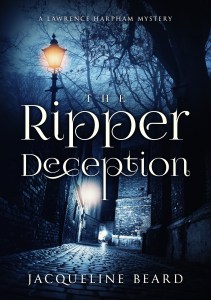
My books are usually set in Suffolk. Vote for Murder features both Stonham Aspall and Christchurch Park in Ipswich. The Fressingfield Witch is the first of the Lawrence Harpham Murder Mysteries. Lawrence lives and works at The Buttermarket in Bury Saint Edmunds, where the book begins. Most of the book is set in the village of Fressingfield as the title implies. The second Lawrence Harpham book, The Ripper Deception sees a location change with Lawrence investigating in London and Brighton. Even so, much of the book involves Bury Saint Edmunds, Chelmondiston, and the delights of Pin Mill.

southwold-harbour-Pixabay

The choice of Suffolk as a setting for my books puts me in excellent company. There are many talented Suffolk writers, who will form the subject of a future blog, but this is a piece about books set in Suffolk locations, regardless of heritage.

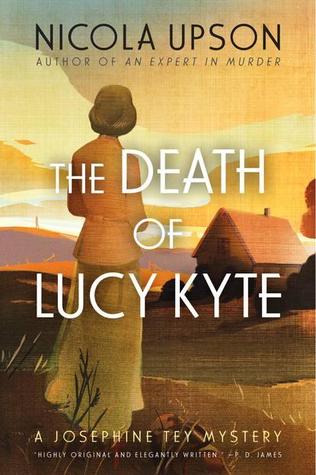
1. The Death of Lucy KyteNicola Upson. I once met Nicola at a crime festival and should have told her that The Death of Lucy The Death of Lucy Kyte.jpgKyte inspired my first book. I have always been fascinated by true crime and mystery books are my favourite genre. With East Anglian heritage and a love of history, this Suffolk mystery was always going to please. The fifth of the Josephine Tey novels, The Death of Lucy Kyte centres around the infamous Red Barn Murder in the village of Polstead where Maria Marten died. It was a fabulous read that I can highly recommend.
2. The Town House – Nora Lofts. Set in Bury Saint Edmunds and featuring 14th-century blacksmith, Martin Reed, The Town House is the first of a Suffolk trilogy. Embarrassingly, I haven’t read anything by by Nora Lofts but The Town House  will be going straight to the top of my TBR pile.
3. We Didn’t Mean to go to Sea – Arthur Ransome. An enchanting children’s adventure set at Pin Mill on the banks of the River Orwell. I have read (and still own) the Swallows and Amazon’s books and have spent many happy moments on the Shotley Peninsula.
4. A Warning to the Curious – M R James. I haven’t read this yet, but I will. Set in the fictional town of Seaburgh, this short ghost story is reputedly dripping with atmosphere and supernatural tension. Seaburgh is evidently recognisable as Aldeburgh, and the author has taken great pains to describe his surroundings.
5. Children of Men – P D James. “…Early this morning, three minutes after midnight, the last human to be born on earth was killed in a pub brawl”. So begins the compelling opening to a book which later became a movie. I watched the film a few years ago with no idea of the Southwold setting. A dystopian book about the effects of male infertility, the premise of the novel is fascinating and terrifying in equal measures. It is quite a departure from the author’s Adam Dalgleish novels. Gallowglass
6. Gallowglass – Ruth Rendell writing as Barbara Vine. No Suffolk book list would be complete without the inclusion of Ruth Rendell who not only lived in Suffolk but set many of her books within its varied landscapes. Psychological mystery thriller Gallowglass features the town of Sudbury, and this book will also be joining my TBR list.

PIle of Books

The Mysterious Deaths in the SPR

One unexplained death at the heart of an organisation is unusual, but three inexplicable deaths within a small group of friends seems more like the plot of a murder mystery novel. Yet that is what happened to Edmund Gurney, Arthur Myers and Frank Podmore, each of whom held important positions within the Society for Psychical Research.   

Edmund Gurney was first to die in 1888 and his death, covered in a previous blog post, was caused by an overdose of chloroform.  Gurney had dined with MP Cyril Flower the evening before and was described by his friend as ‘in good health and with brilliant conversation.”  Flower detected nothing abnormal or untoward in his behaviour. 

Next to die was Arthur Thomas Myers, brother of Frederic William Henry Myers who was President of the Society for Psychical Research from 1900 until his death in 1901.  Doctor Arthur Myers, a close friend of Edmund Gurney, died of asphyxia caused by an overdose of Chloral Hydrate in January 1894.  Mr G W Protheroe of King’s College, Cambridge dined with Myers on the Monday before his death.  He described the doctor as ‘very cheerful’ and said that he had spoken about a journey he was due to undertake to visit a relative. Once again, there was no indication of low spirits. 

The following years were quieter.  Frederic Myers died a natural death from Bright’s disease in 1901. Then, on 14th August 1910, Frank Podmore went missing from his home in Malvern.  

Podmore, who had been staying with Mr and Mrs Cross at 2 Ivy Cottages, The Wyche near Malvern Wells, disappeared on a rainy Sunday evening.  A thunderstorm in the early hours of the morning had disturbed Mr Cross who noticed that Frank Podmore was once again absent from the home, having already left the property several times that day.  The alarm was raised the following morning, and a search party organised but to no avail. Then, on Friday, Podmore’s body was found in a large pool adjoining the Malvern Golf Links.  There were no marks of external injury, and the body was removed to the mortuary. 

Frank Podmore had been composing a letter to his mother before leaving Ivy Cottages for the final time.  It was never completed.  His watch stopped at 11.23 pm precisely, and there is little evidence to suggest that he slipped and fell during the storm.  The jury at the inquest returned an open verdict of “found drowned.”  Mr George Podmore, brother of Frank, said that his brother was always of a particularly cheerful disposition and had been enjoying his holiday in Malvern.  He further added that his brother had always upheld the sacredness of human life. 

Three men, all members of the same organisation were reported as in good spirits at the time of their demise.  So, what happened?  In his book, ‘The Strange Case of Edmund Gurney’, Trevor H Hall speculated that Gurney had committed suicide on discovering that the Brighton telepathists had deceived him.  Though the theory has merit, and mesmerist Douglas Blackburn later confessed to trickery, there is no proof that Gurney was aware of it or that the knowledge might push him into ending his life.  After all, Edmund Gurney’s interests went much further than telepathy and hypnotism, and he was still working on other projects including a paper on “Apparitions occurring soon after death,” which he read during an SPR meeting early in 1888. 

And what of Arthur Myers?  His health had been poor for most of his life, and he also suffered from Bright’s disease, which claimed the life of his brother Frederic. Arthur Myers had recently retired, and it is not inconceivable that illness and a lack of purpose caused him to kill himself.  Yet he was a highly experienced doctor, and the overdose of narcotics left him lingering for two days.  He frequently self-medicated as an aid to sleep.  It is hard to imagine an accidental overdose even in the grip of a seizure, and equally unlikely that a serious attempt at suicide would not result in instant death. 
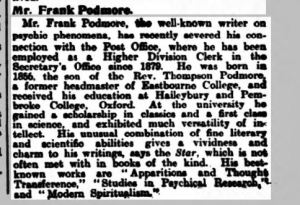
Frank Podmore’s final years were complicated.  The Lake Herald of 14th June 1907 reported that Podmore had severed his ties with The Post Office where he had been employed as a Higher Division Clerk in the Secretary’s Office since 1879.  His biographer later suggested that he had been compelled to resign from the Post Office due to alleged homosexual involvements.   During 1907 he moved to Broughton, near Kettering to live with his brother Claude leaving his wife alone in London. At the time of his death, Frank Podmore was virtually penniless, and it would be easy to conclude that he may have seen suicide as a way out of his problems.  But were they problems?  The Rugby Advertiser is one of the many papers to report that Frank Podmore returned to Ivy Cottage accompanied by a younger man – a causal acquaintance he had met during his walk and who had supper with him.  He had left his wife, and the split was permanent and bitter. She did not attend his funeral, nor did she send a wreath.  And she was not alone.  Several members of his close family failed to attend. But Podmore enjoyed a close relationship with his mother.  Both Frederic Myers and Henry Sidgwick had reputedly dabbled in homosexuality, and therefore his friends within the SPR were most likely tolerant of his lifestyle.  He had escaped what must have been a restrictive and unhappy marriage, and it may well be the case that in leaving London and his career with the Post Office, Frank Podmore had found the opportunity to be himself.  There is no evidence that he was worried or unhappy. 

So, were these deaths suicides, accidental deaths or something else?  We will probably never know.  Psychic researchers who believe in life after death, are introspective by their very nature and perhaps more prone to suicide.  And although Frederic Myers died naturally, suicide stalked his family beginning with the suicide by drowning of his lover Annie Hill Marshall in 1876 and ending with the overdose of his son Leopold Myers in 1944.  It is ironic that Myers, who died naturally and embraced his demise with enthusiasm, was a common denominator in the other mysterious deaths. 
The Haunting of Chelmondiston Rectory

Located a short way along the Shotley peninsula, the village of Chelmondiston is notable for the hamlet of Pin Mill and views across the River Orwell.  Rebuilt in the 1860’s, the local parish church of St Andrews lost its tower to a flying bomb in 1944.  But it was the Chelmondiston Rectory that was the subject of interest in a Bury & Norwich Post article during November 1890. 

My books are themed, and The Ripper Deception explores the Victorian fascination with spiritualism.  Before its conclusion in London, Violet and Lawrence embark on different investigations with Violet arriving in Chelmondiston to find out the cause of strange noises in the Rectory. Her visit coincides with one by a representative of the Society for Psychical Research. 

I based this part of The Ripper Deception on the Bury & Norwich post article which described the haunting in detail.  The Rectory, standing on the left of the road running from Ipswich to Shotley, was built around 1850 and was home to several rectors before the arrival of the Reverend George Woodward and his wife, Alice.  The previous Rector, the Reverend Beaumont, had a large family but the Reverend and Mrs Woodward were childless, and the household was considerably quieter.  When they first moved to the house, they were unaware of its reputation, but before long they began to hear footfalls in the passages and doors opening and closing in the dead of night.  After speaking to the servants, it became apparent that they also witnessed unexplained noises, and one of the maidservants saw the ghost who she described as a small, shabbily-dressed, grey-bearded man. 

The disturbances continued unabated with the Reverend concerned enough to search every nook and cranny of the house looking for an explanation.  He examined drains, removed floorboards and even inspected the ivy on the outside walls, but the noises and sightings continued.  The newspaper reported that a member of the Psychical Society arrived to instigate personal inquiries but heard nothing unusual.  Neither did several gentlemen of the neighbourhood who also watched at night. 

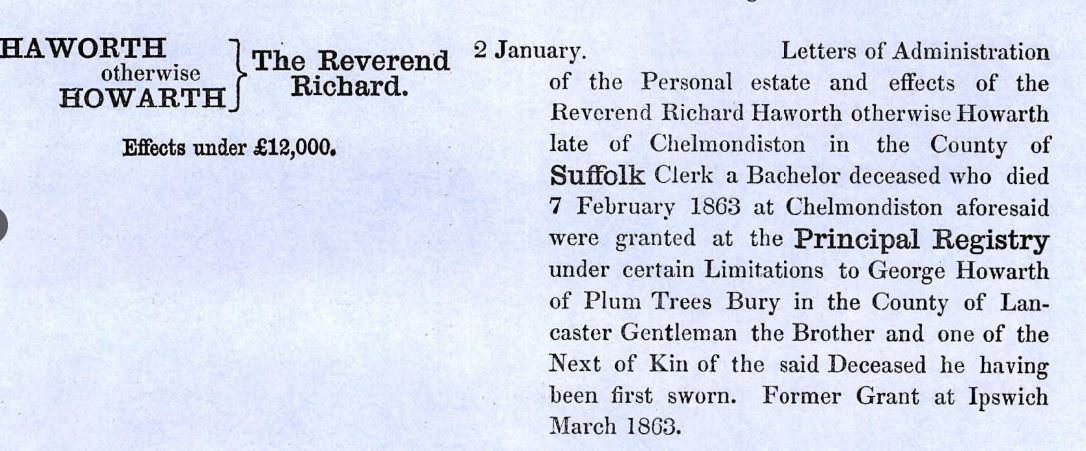
Nevertheless, rumours of the ghost spread into the village and reached the ears of the older inhabitants. They still remembered Reverend Beaumont’s predecessor, a certain Reverend Richard Howarth who was Rector of the parish from 1858 until his death from acute bronchitis in 1863.  Reverend Haworth was an inveterate miser, so mean that he dressed in rags and only allowed himself half an egg for a meal.  He became known as “cabbage” Haworth after promising an ill parishioner a treat and delivering a cabbage.   

But why would a miserly man of religion haunt the Rectory?  Those who remembered Reverend Haworth also recalled the unusual circumstances of his will.  Buried in the Chelmondiston churchyard, Howarth was worth about £40,000 when he died, and his will was supposedly found in a pond near the roadside in a book of old sermons wrapped in a piece of cloth.  Villagers believed that his troubled spirit still searched the rectory for some hidden portion of his money.   

The story sounds unlikely, but a quick look at the 1861 census shows the Reverend living at the Rectory with one servant.  He died a bachelor on 7th February 1863 and letters of administration granted personal estate and effects to his brother George.  So far, so good.  However, an article in the Cambridge Independent Press on 23 May 1863 describes a court case resulting when an anonymous letter containing the missing will turned up at the home of his relative James Haworth. The will, drawn up and executed by the Reverend Haworth’s nephew Richard was partly burned and torn. The judge viewed the will with great suspicion, as there was no indication of how it got burned, and whether the damage constituted cancellation. He postponed the case with instructions that it could not proceed without the collection of further evidence.  And that’s where my investigation ends.  I can’t find any other articles to prove what happened next.   

However, an 1884 newspaper cutting shows a list of large, unclaimed fortunes, one of which is in the name of Haworth.  Mysteriously, the final paragraph of the Bury & Norwich Post article explains the lack of progress in the case stating that the judge who tried the issue died suddenly at the most critical point.  This is true – he did.  Justice Cresswell died in office on 29 Jul 1863 from complications arising from a fall from his horse.


Skulduggery in Stowmarket

Suffolk’s newest Crime Festival – Stowmarket Library 27 – 30 April 2018

Tickets on sale from Stowmarket Library and Mid Suffolk Tourist Information Centre from 6 March. £5 per author talk or £20 for all six.

Stowmarket Crime Fest Line Up


Genealogy Fiction

stack-of-books-1001655_1920

Fiction genres are malleable. Books move in and out of popularity and often straddle several genres. Genealogy fiction is a sub-genre, usually combining murder mystery and crime with genealogical research. But what defines genealogy fiction? Must the protagonist be a genealogist to qualify?

My first foray into genealogy fiction was The Blood Detective by Dan Waddell. I liked it so much I immediately bought Blood Atonement and finished it within days. As a seasoned genealogist, I was hooked. Before long, I had graduated to Steve Robinson and his Jefferson Tayte mysteries and Nathan Dylan Goodwin’s forensic genealogist Morton Farrier. I am currently reading Goodwin’s The Suffragette’s Secret and very good it is too. Top of my genealogy fiction ‘to read’ list is Stephen Molyneau’s The Marriage Certificate and M J Lee’s The Irish Inheritance when time allows.

When I wrote Vote for Murder, it was inevitably going to have a genealogical theme being based on two of my ancestors, one a suffragette and one a convicted poisoner. The Fressingfield Witch is also based on my ancestry and was inspired by a public accusation of witchcraft made against a distant relative. The protagonist in Vote for Murder is an independent young suffragette who unravels a murder using a diary and family records. Private Investigator Lawrence Harpham uses parish and probate records to unmask the murderer in The Fressingfield Witch, but neither Lawrence nor suffragette, Louisa are genealogists. Are the books then worthy of the sub-genre classification of genealogy fiction? And does it matter that they are both set in Victorian times where the opportunity to use family history records was more limited? One never wants to disappoint an audience so getting the genre right is important. But I believe that both books nestle well into the genealogy fiction genre, even if they are not quite the same as their better-known counterparts.

The below is a list of well-known genealogy fiction writers. Some I have yet to read, but I heartily recommend the top three. Enjoy.

Dan Waddell – The Blood Detective & Blood Atonement

Steve Robinson – Any of his Jefferson Tayte offerings

Nathan Dylan Goodwin – Any Morton Farrier, forensic genealogist

M K Jones – The Genealogy Detectives

Geraldine Wall – File under Fear/Family/Fidelity

Stephen Molyneaux – The Marriage Certificate

M J Lee – The Jayne Sinclair Genealogical Mysteries

John Nixon – Madeleine Porter Mysteries

Beryl Taylor – Therese

A Writers Life – Taking a break from the day job

IMG_1191It’s the first day of a week away from work. The weather is disgusting. My dog is sullenly pacing round the house eyeing me with disapproval. It’s so foul outside, that today we are going nowhere.
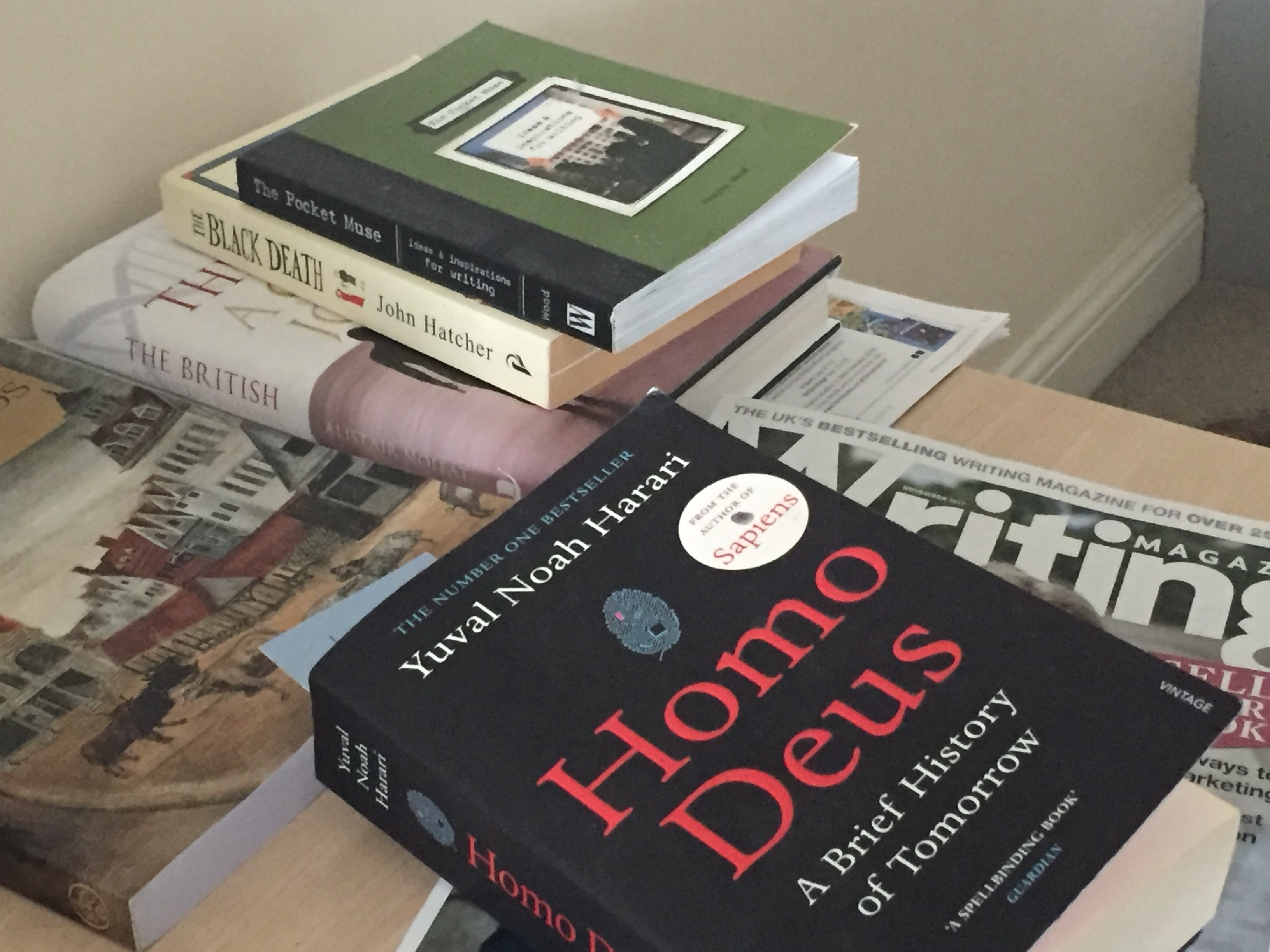
I like a walk. It keeps the dog happy and my Fitbit from nagging. Today my Fitbit sits redundantly on my arm while I contemplate the pile of books I have been looking forward to reading, but have lain gathering dust on my bedside table while other things take priority.

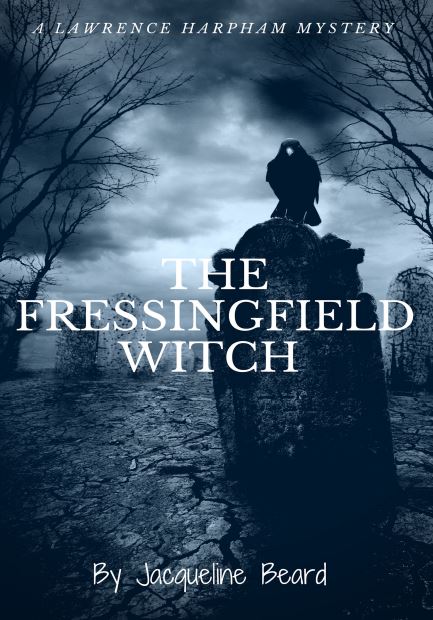
The Fressingfield Witch, is one of those other things. My latest novel is a Victorian murder mystery set in Suffolk and based on a real news item that hit the local headlines in 1890. It was an allegation of witchcraft. The news item was only short, but had an immediate impact on me. For starters, it involved one of my very distant relatives. That’s always a good lure to a genealogist. And it involved death and witchcraft, so my inner writer pricked up her ears. Before I knew it, we had conjured up a novel from this tiny eleven-lined piece of inspiration.

I’ve taken a risk with this book. The real village of Fressingfield has been populated with actual people from the 1891 census. This will be like marmite to some. They will either appreciate the idea of real people living on in print, or they will disapprove of the merging together of fact and fiction. I hope it is the former.

The final cover and finished drafts are with Publishnation and should be ready for purchase very soon. All of which gives me the rest of the week to catch up with a little light reading of my own. Unless the rain lifts and the dog demands a walk. Doing a little rain dance now…..

Front Cover snip