Death in the Victorian Era

Ouija board

Death in the Victorian Era

The Victorian Era was a golden age for literature, culture, and the arts. However, strange quirks and odd traditions emerged alongside the industrial revolution. From the obsessions around mourning to the beginnings of Victorian spiritualism, the world of death and the beyond was a topic that captivated Victorian culture and traditions.

Dead Men Smiling

For a time, Victorians reserved death portraits for prominent people. But that soon changed. Creating a death portrait in the home during the mourning period became fashionable. The original mourning portraits were expensive and reserved for the upper-middle-class as photography had yet to advance. However, with the invention of the Daguerreotypes, those with limited income could also create an image of their deceased loved ones. 

Daguerreotypes were remarkably detailed photographic images exposed onto a silver-plated sheet of copper. First developed in mercury fumes, the sheets were then stabilised with salt water, resulting in a clear picture. This process required a subject to remain still for a time, though less time than photography had once taken. Usefully, the dead tend not to move, so it was a logical step for mourning families to use this method for their portraits.

Hand-held Daguerreotypes were popular for parents of deceased youngsters who may not have taken their image in life. The photograph often showed the child lying in bed as if asleep. As the era progressed, including the bereaved parents became common. The trend varied for adults, often arranging the deceased subject to appear as lifelike as possible. This might involve the subject sitting upright or standing in the parlour. Many families would join their deceased loved ones in the image, ensuring a focus on remembrance rather than sadness.

Communication With The Other Side

During this period, the Fox sisters gained prominence. Leah, Maggie, and Kate Fox claimed a resident ghost named Mr Splitfoot would respond to their questions by rapping on the floorboards. Their story became popular, leading them to take their performances on tour, conducting seances for a paying audience in Corinthian Hall, Rochester. However, their supposed supernatural abilities were proven a hoax. The sisters had tapped their feet against the table beneath their voluminous dresses.

Spiritualism fascinated the author Arthur Conan Doyle, but Charles Dickens remained unconvinced, satirising his cynicism in The Christmas Carol.

Victorian Era Candle

Returning From the Dead?

As science and the Scientific Method spread throughout Victorian England, so did the central idea of resurrection. In fact, the study of the body, its limits, and how to heal it became a strong focus for many gentlemen, medical practitioners and scientists. Following the first successful blood transfusion in 1818, Blundell used his knowledge and experience to complete the first whole blood transfusion in 1840, helping treat a patient’s haemophilia. Soon after, in 1884, saline was introduced as a blood replacement, taking over from milk, a treatment we still use today. Unfortunately, successful experiments were not typical. Many theories missed the mark or came closer to mad science than medicine, like galvanisation. This process created electrical signals through chemical reactions by shocking something with electricity to get a result. After Luigi Galvani’s shows involving electricity used to stimulate the muscles of dead frogs and other animal carcasses, several theories considered electricity the key to resurrection. Mary Shelley’s Frankenstein also inspired some of these ideas with her creation of Frankenstein. Sadly, Victorian scientists never realised their dream of resurrection.

Despite the strange customs of the Victorians, some of their ideas and methods are still in use today, though vastly changed over the years. The advances in medicine and understanding have been incorporated and improved in the modern day, allowing us to utilise blood transfusions, skin grafts and more. Many ideas from the spiritualism movement appear in today’s writing world, inspiring everything from possession stories to tales of the walking dead. Thankfully, we have phased out the concept of photographing our dead post-mortem, which could have led to a rather esoteric social media trend.

Guest Article by Alexander Fairweather

Crime Writers’ Association

I’m proud to post that I am now a member of The Crime Writers’ Association, an aspiration I’ve held for many years. This prestigious organisation, founded in 1953, represents all kinds of crime writers, from psychological to thriller and cosy to supernatural – a good thing, as my cross-genre writing encompasses all the above!


And I’m in good company among best-selling authors like Rachel Abbott, Angela Marsons and M W Craven, to name but a few. It’s good to belong, and in the fullness of time, I hope to attend one of their regular conferences.


Talking of which, the SPF Conference is almost here in its regular venue at The Southbank Centre. Now in its third year, I’ll be there again, catching up with author friends and gaining valuable insight on self-publishing matters. Perhaps I’ll even learn what makes the ever-changing Amazon algorithms tick!

Click the link to check out my CWA author page https://thecwa.co.uk/find-an-author/beard-jacqueline

The Disappearing Doctor

I based this book on twenty-nine-year-old Doctor Sophia Hickman, who vanished in August 1903. Outlandish theories raged in the press about the reasons for her disappearance which I won’t mention here for fear of spoilers! Apart from my fictional solution, I have mostly kept to the facts of the case as described in the newspapers of the time.


Featured also is fraudulent medium Jane Savage, loosely based on Mrs Strutt, the wife of Major Charles Henry Strutt, who attempted to defraud Henry S H Cavendish, a renowned African explorer. Posing as a medium, Mrs Strutt introduced Cavendish to seances, in which she conveyed spiritual messages from his late mother. The Struts seized his fortune, only relinquishing control after a judgement against them in a hearing known as The Planchette Case.


Though primarily set in London and Richmond Park, I couldn’t resist another foray into my beloved home county of Suffolk. This time, the action takes place in the tiny village of Akenham, involving the ancient legend of the Akenham Devil. Walk thirteen times widdershins around the ancient split stone in St Mary’s Church, and the devil will rise, or so they say. Lawrence, naturally, becomes embroiled. But I will say no more for now!

The Disappearing Doctor is available in all good ebook stores by following this link https://books2read.com/u/mYxRdd If you prefer to read physical books, head over to my bookstore.

The Girl in Flat Three – a Psychological Crime Thriller set in the Cotswolds

Who can you trust in a house full of secrets?

Sass Denman is tired. Tired of being unemployed, tired of being alone and tired of the sickly smell coming from her floorboards.

But a chance conversation leads her to Sean Tallis, a lizard-loving private eye with a maverick approach to the law. Their routine case soon uncovers a missing girl with connections to an unsolved murder from the past. Has the Skin Thief returned after lying dormant for a decade?

As the evidence mounts, the trail leads to Saskia’s flat in Bosworth House. Petty problems confound her neighbours, each one more sinister than the last. Why is the cellar door padlocked shut, and will the arguments in Flat Four never stop?

Follow the link to on Amazon https://geni.us/TGIF3 – FREE on Kindle Unlimited

Also available as a paperback on my Payhip site https://payhip.com/b/I0PLx

The Poisoned Partridge

Lieutenant Hugh Chevis ate his final meal at home on 21 June 1931. Dining on a starter of slip soles, he was looking forward to the main event – a brace of partridges he intended to share with his wife, Frances. It only took one mouthful to realise that something was terribly wrong, and he died later that night in Frimley hospital. Three days passed, and a telegram arrived at his father’s house. Sent from J Hartigan, The Hibernian Hotel, Dublin, the message read ‘Hooray, Hooray, Hooray.”


The sender was never identified; the poisoner never found. This mystery is the basis for Book 3 in The Constance Maxwell Dreamwalker Mysteries.

I don’t know who I am, but he does – and he’s coming for me.

Connie’s life is a mystery, her background unknown, her future unclear. But one thing hasn’t changed – an unusal talent perfect for solving crimes.

A random meeting, a brace of poisoned partridges, and Connie is knee-deep in trouble again. Her life is slowly unravelling, the truth almost in grasping distance. If only she could remember. But somebody can. And he’ll use any means to get to her. Can Connie escape his clutches one more time?

The Poisoned Partridge is the third book in a gripping 1920s mystery series with a supernatural twist. Based on the true unsolved poisoning of Hugh Chevis. Pre-order here for delivery on 26th June.

All Things Victorian

Love the Victorian Period? Ready to try a new book? Then look no further.

Click here for a curated selection of Victorian fiction offerings by best selling mystery and romance authors including:

John Gaspard

Liz Hedgecock

Jacqueline Beard

M Louisa Locke

Paula Harmon

And many other authors

Vote For Murder

Scandal, Secrets & Suffragettes – Vote for Murder is FREE on Amazon Kindle until 4th March 2022. Get your copy here https://geni.us/VFM2

It’s 1911, and the women of Ipswich are making a peaceful stand against the unfairness of the voting system. Suffragist Louisa Russell joins the census evasion protest at the local museum. While exploring the back rooms, she finds a diary belonging to a prisoner – and not just any prisoner, but the infamous Mary Cage executed for murdering her husband James six decades earlier. When Louisa’s next-door neighbour dies under suspicious circumstances, the parallels between his death and James Cage’s poisoning become impossible to ignore. But can there be a link between two deaths sixty years apart? And will Louisa find the poisoner before an innocent woman is convicted?

Vote for Murder is historical fiction based on a true Suffolk crime.

Common Forms of Mystery Fiction

A Guest Post by Alex Fairweather

Common Tropes of Mystery Fiction

The mystery Fiction genre involves strange or mysterious happenings driving the story forward. These events often occur while the protagonist attempts to solve a mystery, find a murderer or resolve a supernatural puzzle. The mystery genre has been thriving since the Golden Age of Agatha Christie and her peers, leaving Detective Mystery firmly cemented into the world of fiction writing.  Mystery books were soon rife with repeatedly used tropes, some to impressive effect and others to the point of ridicule, promoting some excellent parodies of mystery tales. This article looks at common tropes from the mystery genre, discussing their use and whether writers should avoid them. 

The Basic Classes of Mystery

Three basic classes of mystery novel include the Fair-Play Whodunnit, the Clueless Mystery, and the Reverse Whodunnit. In the Fair-Play Whodunnit, the reader, knows what the detective knows, gaining clues as the detective finds them. A sharp mind will find a moment in the plot where there is enough information to solve the mystery before the detective does. The opposite is true with the Clueless Mystery where the reader has insufficient information to solve the problem. Finally, the Reverse Whodunnit is possibly the most exciting form of mystery. The reader knows the who, what and why from the beginning of the story, potentially having more information than the detective ever finds out. The plot becomes a nail-biting tale focused on figuring out how the detective solves a perfect crime. Isaac Asimov’s The Singing Bell and The Dust of Death short stories follow this class, with the reader watching the murder happen first before being introduced to the detective as the investigation begins. 

The Subgenres

Some familiar mystery subgenres include Amateur Sleuth, Cozy Mystery, Great Detective, and Historical Detective Fiction. Cosy mysteries tend to downplay violence with the crime occurring in a small, intimate community. Agatha Christie’s famous Miss Marple is a classic example of this subgenre, with a little old lady in a small village turning detective. And continuing in the theme of Christie is the Great Detective, a classic character relying on their powers of deduction, insight, or education to solve cases. Who better to exemplify this stereotype than the great Belgian detective Hercule Poirot, possibly the most well-known character of Christie’s repertoire? His ability to solve crimes quickly using intellect makes him a stand-out detective who Christie further sets apart by characterizing him with a signature moustache and a peculiar gait. The Amateur Sleuth is an untrained detective with no legal background who ends up crime-solving by accident. These budding investigators can inhabit any genre, sometimes venturing into the paranormal like the astral travelling Constance Maxwell. And let’s not forget the Historical Detective Fiction subgenre concerning mystery stories set in the past, like the indefatigable Sherlock Holmes with his ever-reliable sidekick, Dr Watson. 

The Tropes

So those are the genres, but what are the tropes? Listing every trope would take too much time, as they are ever-growing and move with the times. Which are the most common, and will they last in the future?

Eagle-Eye Detection: This trope intrinsically links to Arthur Conan Doyle’s Sherlock Holmes and Agatha Christie’s Poirot. Both detectives rely on observing otherwise-unnoticed clues to solve their mysteries, often confounding the police. Hidden weapons, shards of glass and other less obvious clues can lead to the Eagle-Eyed Detective solving the case with very little else to go on. Eagle-Eyed Detection is often confused with Awesomeness by Analysis, of which Sherlock Holmes is the patron saint. This trope relies on the protagonist running calculations and theories in their head to come to an instant result, surpassing most human capability. Both tropes make the protagonist seem intellectually superior but can give the feeling of a contrived solution. For that reason, it is wise to use Eagle-Eye Detection reservedly, especially in modern media.

Everyone Is a Suspect: One of Poirot’s most famous stories, Death on the Nile, places the victim on a boat surrounded by enemies, making every character a possible suspect. The Everyone Is a Suspect trope turns a mystery into an edge-of-the-seat thriller if used correctly. Nobody knows who the murderer is or if they will strike again. Some authors include the detective as a suspect to make this trope even more effective. 

Never Suicide: A common trope in mystery novels is where a death first ruled as suicide becomes an act of murder. Unfortunately, overuse of this trope can render it dull, but given a slow, sinister pace, it can transform from a standard story beat into an unexpected twist.

Thriller on the Express: An easily guessable trope, the Thriller on the Express involves a mystery occurring on a train, notably featured in Murder on the Orient Express. Equally famous is From Russia with Love, in which international superspy James Bond survives a deadly assassination attempt by Red Grant. Modern stories often subvert the Thriller on the Express trope, perhaps by finding a body on a train with the murder committed elsewhere.

Should authors avoid tropes?

Unlike a cliché which is an overused idea that has become stale, a trope is a story building device. Though frequently found, effective use of tropes creates compelling stories, and it is perfectly acceptable to recycle them. Readers like to know what they are getting and often search for a particular trope to satisfy their needs. But like anything, tropes can go in and out of fashion. Regardless, they are here to stay.

What are your favourite tropes and why? 

The Maleficent Maid

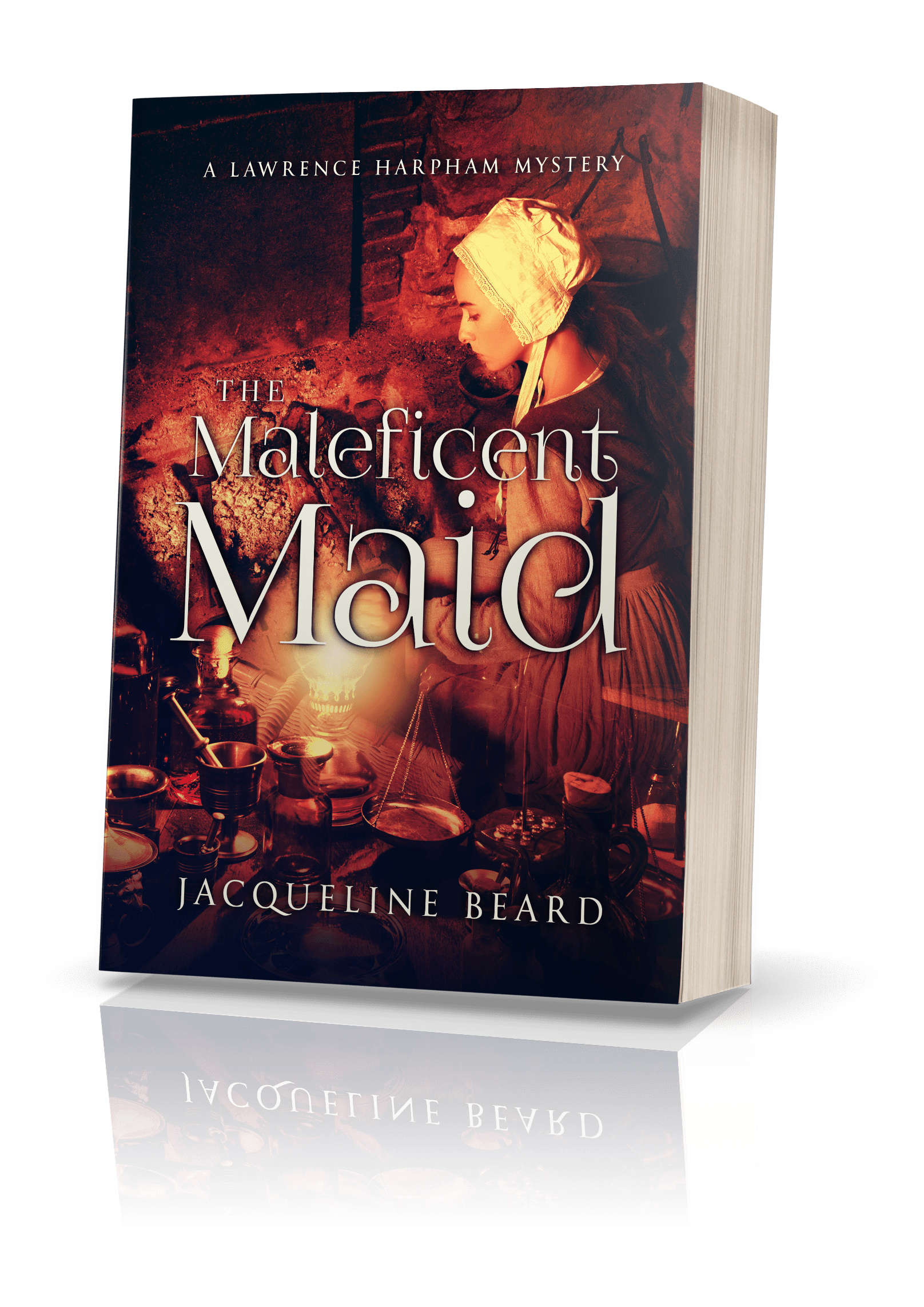
The Maleficent Maid is now available in paperback far earlier than expected and long before the kindle pre-order, still scheduled for 27th December. But if you prefer your books in print or would like to purchase a Christmas gift for that Suffolk mystery reader in your life, please visit the Lulu store for your copy.

The Maleficent Maid. Suffolk 1903. William Gardiner is on trial for his life for the cold-hearted stabbing of Rose Harsent. In a last-ditch attempt to find the murderer, concerned parties call on Lawrence Harpham for help, but someone is stalking the good people of Peasenhall and confounding his investigation. Meanwhile, Violet takes on a poisoning puzzle from the past. Was the bad-tempered housemaid a killer or just a convenient suspect? With two historical crimes and the distraction of a mysterious stranger at Netherwood, will they solve the case before time runs out? The Maleficent Maid is a historical mystery based on true crimes.

Click here for your paperback copy.