Death in the Victorian Era

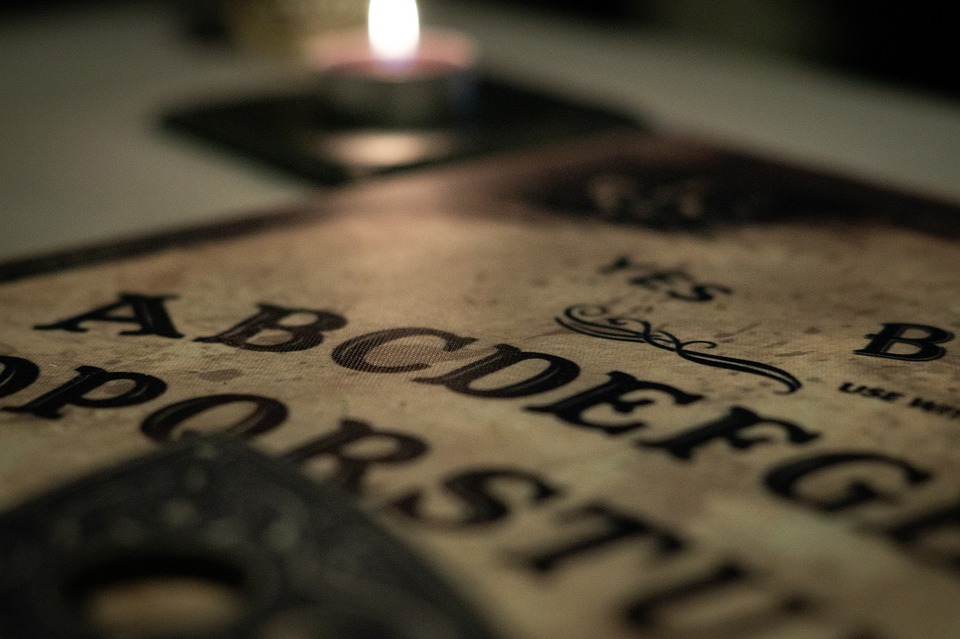
Ouija board

Death in the Victorian Era

The Victorian Era was a golden age for literature, culture, and the arts. However, strange quirks and odd traditions emerged alongside the industrial revolution. From the obsessions around mourning to the beginnings of Victorian spiritualism, the world of death and the beyond was a topic that captivated Victorian culture and traditions.

Dead Men Smiling

For a time, Victorians reserved death portraits for prominent people. But that soon changed. Creating a death portrait in the home during the mourning period became fashionable. The original mourning portraits were expensive and reserved for the upper-middle-class as photography had yet to advance. However, with the invention of the Daguerreotypes, those with limited income could also create an image of their deceased loved ones. 

Daguerreotypes were remarkably detailed photographic images exposed onto a silver-plated sheet of copper. First developed in mercury fumes, the sheets were then stabilised with salt water, resulting in a clear picture. This process required a subject to remain still for a time, though less time than photography had once taken. Usefully, the dead tend not to move, so it was a logical step for mourning families to use this method for their portraits.

Hand-held Daguerreotypes were popular for parents of deceased youngsters who may not have taken their image in life. The photograph often showed the child lying in bed as if asleep. As the era progressed, including the bereaved parents became common. The trend varied for adults, often arranging the deceased subject to appear as lifelike as possible. This might involve the subject sitting upright or standing in the parlour. Many families would join their deceased loved ones in the image, ensuring a focus on remembrance rather than sadness.

Communication With The Other Side

During this period, the Fox sisters gained prominence. Leah, Maggie, and Kate Fox claimed a resident ghost named Mr Splitfoot would respond to their questions by rapping on the floorboards. Their story became popular, leading them to take their performances on tour, conducting seances for a paying audience in Corinthian Hall, Rochester. However, their supposed supernatural abilities were proven a hoax. The sisters had tapped their feet against the table beneath their voluminous dresses.

Spiritualism fascinated the author Arthur Conan Doyle, but Charles Dickens remained unconvinced, satirising his cynicism in The Christmas Carol.
Victorian Era Candle

Returning From the Dead?

As science and the Scientific Method spread throughout Victorian England, so did the central idea of resurrection. In fact, the study of the body, its limits, and how to heal it became a strong focus for many gentlemen, medical practitioners and scientists. Following the first successful blood transfusion in 1818, Blundell used his knowledge and experience to complete the first whole blood transfusion in 1840, helping treat a patient’s haemophilia. Soon after, in 1884, saline was introduced as a blood replacement, taking over from milk, a treatment we still use today. Unfortunately, successful experiments were not typical. Many theories missed the mark or came closer to mad science than medicine, like galvanisation. This process created electrical signals through chemical reactions by shocking something with electricity to get a result. After Luigi Galvani’s shows involving electricity used to stimulate the muscles of dead frogs and other animal carcasses, several theories considered electricity the key to resurrection. Mary Shelley’s Frankenstein also inspired some of these ideas with her creation of Frankenstein. Sadly, Victorian scientists never realised their dream of resurrection.

Despite the strange customs of the Victorians, some of their ideas and methods are still in use today, though vastly changed over the years. The advances in medicine and understanding have been incorporated and improved in the modern day, allowing us to utilise blood transfusions, skin grafts and more. Many ideas from the spiritualism movement appear in today’s writing world, inspiring everything from possession stories to tales of the walking dead. Thankfully, we have phased out the concept of photographing our dead post-mortem, which could have led to a rather esoteric social media trend.

Guest Article by Alexander Fairweather

The Disappearing Doctor

I based this book on twenty-nine-year-old Doctor Sophia Hickman, who vanished in August 1903. Outlandish theories raged in the press about the reasons for her disappearance which I won’t mention here for fear of spoilers! Apart from my fictional solution, I have mostly kept to the facts of the case as described in the newspapers of the time.


Featured also is fraudulent medium Jane Savage, loosely based on Mrs Strutt, the wife of Major Charles Henry Strutt, who attempted to defraud Henry S H Cavendish, a renowned African explorer. Posing as a medium, Mrs Strutt introduced Cavendish to seances, in which she conveyed spiritual messages from his late mother. The Struts seized his fortune, only relinquishing control after a judgement against them in a hearing known as The Planchette Case.


Though primarily set in London and Richmond Park, I couldn’t resist another foray into my beloved home county of Suffolk. This time, the action takes place in the tiny village of Akenham, involving the ancient legend of the Akenham Devil. Walk thirteen times widdershins around the ancient split stone in St Mary’s Church, and the devil will rise, or so they say. Lawrence, naturally, becomes embroiled. But I will say no more for now!

The Disappearing Doctor is available in all good ebook stores by following this link https://books2read.com/u/mYxRdd If you prefer to read physical books, head over to my bookstore.

The Mysterious Deaths in the SPR

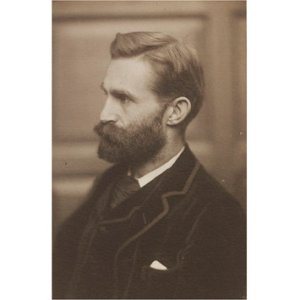
One unexplained death at the heart of an organisation is unusual, but three inexplicable deaths within a small group of friends seems more like the plot of a murder mystery novel. Yet that is what happened to Edmund Gurney, Arthur Myers and Frank Podmore, each of whom held important positions within the Society for Psychical Research.   

Edmund Gurney was first to die in 1888 and his death, covered in a previous blog post, was caused by an overdose of chloroform.  Gurney had dined with MP Cyril Flower the evening before and was described by his friend as ‘in good health and with brilliant conversation.”  Flower detected nothing abnormal or untoward in his behaviour. 

Next to die was Arthur Thomas Myers, brother of Frederic William Henry Myers who was President of the Society for Psychical Research from 1900 until his death in 1901.  Doctor Arthur Myers, a close friend of Edmund Gurney, died of asphyxia caused by an overdose of Chloral Hydrate in January 1894.  Mr G W Protheroe of King’s College, Cambridge dined with Myers on the Monday before his death.  He described the doctor as ‘very cheerful’ and said that he had spoken about a journey he was due to undertake to visit a relative. Once again, there was no indication of low spirits. 

The following years were quieter.  Frederic Myers died a natural death from Bright’s disease in 1901. Then, on 14th August 1910, Frank Podmore went missing from his home in Malvern.  

Podmore, who had been staying with Mr and Mrs Cross at 2 Ivy Cottages, The Wyche near Malvern Wells, disappeared on a rainy Sunday evening.  A thunderstorm in the early hours of the morning had disturbed Mr Cross who noticed that Frank Podmore was once again absent from the home, having already left the property several times that day.  The alarm was raised the following morning, and a search party organised but to no avail. Then, on Friday, Podmore’s body was found in a large pool adjoining the Malvern Golf Links.  There were no marks of external injury, and the body was removed to the mortuary. 

Frank Podmore had been composing a letter to his mother before leaving Ivy Cottages for the final time.  It was never completed.  His watch stopped at 11.23 pm precisely, and there is little evidence to suggest that he slipped and fell during the storm.  The jury at the inquest returned an open verdict of “found drowned.”  Mr George Podmore, brother of Frank, said that his brother was always of a particularly cheerful disposition and had been enjoying his holiday in Malvern.  He further added that his brother had always upheld the sacredness of human life. 

Three men, all members of the same organisation were reported as in good spirits at the time of their demise.  So, what happened?  In his book, ‘The Strange Case of Edmund Gurney’, Trevor H Hall speculated that Gurney had committed suicide on discovering that the Brighton telepathists had deceived him.  Though the theory has merit, and mesmerist Douglas Blackburn later confessed to trickery, there is no proof that Gurney was aware of it or that the knowledge might push him into ending his life.  After all, Edmund Gurney’s interests went much further than telepathy and hypnotism, and he was still working on other projects including a paper on “Apparitions occurring soon after death,” which he read during an SPR meeting early in 1888. 

And what of Arthur Myers?  His health had been poor for most of his life, and he also suffered from Bright’s disease, which claimed the life of his brother Frederic. Arthur Myers had recently retired, and it is not inconceivable that illness and a lack of purpose caused him to kill himself.  Yet he was a highly experienced doctor, and the overdose of narcotics left him lingering for two days.  He frequently self-medicated as an aid to sleep.  It is hard to imagine an accidental overdose even in the grip of a seizure, and equally unlikely that a serious attempt at suicide would not result in instant death. 

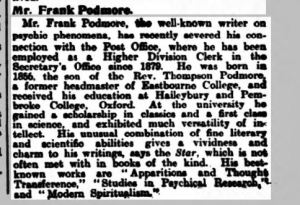
Frank Podmore’s final years were complicated.  The Lake Herald of 14th June 1907 reported that Podmore had severed his ties with The Post Office where he had been employed as a Higher Division Clerk in the Secretary’s Office since 1879.  His biographer later suggested that he had been compelled to resign from the Post Office due to alleged homosexual involvements.   During 1907 he moved to Broughton, near Kettering to live with his brother Claude leaving his wife alone in London. At the time of his death, Frank Podmore was virtually penniless, and it would be easy to conclude that he may have seen suicide as a way out of his problems.  But were they problems?  The Rugby Advertiser is one of the many papers to report that Frank Podmore returned to Ivy Cottage accompanied by a younger man – a causal acquaintance he had met during his walk and who had supper with him.  He had left his wife, and the split was permanent and bitter. She did not attend his funeral, nor did she send a wreath.  And she was not alone.  Several members of his close family failed to attend. But Podmore enjoyed a close relationship with his mother.  Both Frederic Myers and Henry Sidgwick had reputedly dabbled in homosexuality, and therefore his friends within the SPR were most likely tolerant of his lifestyle.  He had escaped what must have been a restrictive and unhappy marriage, and it may well be the case that in leaving London and his career with the Post Office, Frank Podmore had found the opportunity to be himself.  There is no evidence that he was worried or unhappy. 

So, were these deaths suicides, accidental deaths or something else?  We will probably never know.  Psychic researchers who believe in life after death, are introspective by their very nature and perhaps more prone to suicide.  And although Frederic Myers died naturally, suicide stalked his family beginning with the suicide by drowning of his lover Annie Hill Marshall in 1876 and ending with the overdose of his son Leopold Myers in 1944.  It is ironic that Myers, who died naturally and embraced his demise with enthusiasm, was a common denominator in the other mysterious deaths. 

The Haunting of Chelmondiston Rectory

Located a short way along the Shotley peninsula, the village of Chelmondiston is notable for the hamlet of Pin Mill and views across the River Orwell.  Rebuilt in the 1860’s, the local parish church of St Andrews lost its tower to a flying bomb in 1944.  But it was the Chelmondiston Rectory that was the subject of interest in a Bury & Norwich Post article during November 1890. 

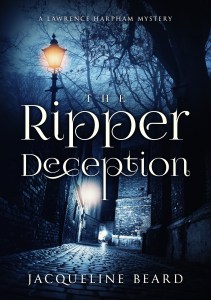
My books are themed, and The Ripper Deception explores the Victorian fascination with spiritualism.  Before its conclusion in London, Violet and Lawrence embark on different investigations with Violet arriving in Chelmondiston to find out the cause of strange noises in the Rectory. Her visit coincides with one by a representative of the Society for Psychical Research. 

I based this part of The Ripper Deception on the Bury & Norwich post article which described the haunting in detail.  The Rectory, standing on the left of the road running from Ipswich to Shotley, was built around 1850 and was home to several rectors before the arrival of the Reverend George Woodward and his wife, Alice.  The previous Rector, the Reverend Beaumont, had a large family but the Reverend and Mrs Woodward were childless, and the household was considerably quieter.  When they first moved to the house, they were unaware of its reputation, but before long they began to hear footfalls in the passages and doors opening and closing in the dead of night.  After speaking to the servants, it became apparent that they also witnessed unexplained noises, and one of the maidservants saw the ghost who she described as a small, shabbily-dressed, grey-bearded man. 

The disturbances continued unabated with the Reverend concerned enough to search every nook and cranny of the house looking for an explanation.  He examined drains, removed floorboards and even inspected the ivy on the outside walls, but the noises and sightings continued.  The newspaper reported that a member of the Psychical Society arrived to instigate personal inquiries but heard nothing unusual.  Neither did several gentlemen of the neighbourhood who also watched at night. 

Nevertheless, rumours of the ghost spread into the village and reached the ears of the older inhabitants. They still remembered Reverend Beaumont’s predecessor, a certain Reverend Richard Howarth who was Rector of the parish from 1858 until his death from acute bronchitis in 1863.  Reverend Haworth was an inveterate miser, so mean that he dressed in rags and only allowed himself half an egg for a meal.  He became known as “cabbage” Haworth after promising an ill parishioner a treat and delivering a cabbage.   

But why would a miserly man of religion haunt the Rectory?  Those who remembered Reverend Haworth also recalled the unusual circumstances of his will.  Buried in the Chelmondiston churchyard, Howarth was worth about £40,000 when he died, and his will was supposedly found in a pond near the roadside in a book of old sermons wrapped in a piece of cloth.  Villagers believed that his troubled spirit still searched the rectory for some hidden portion of his money.   

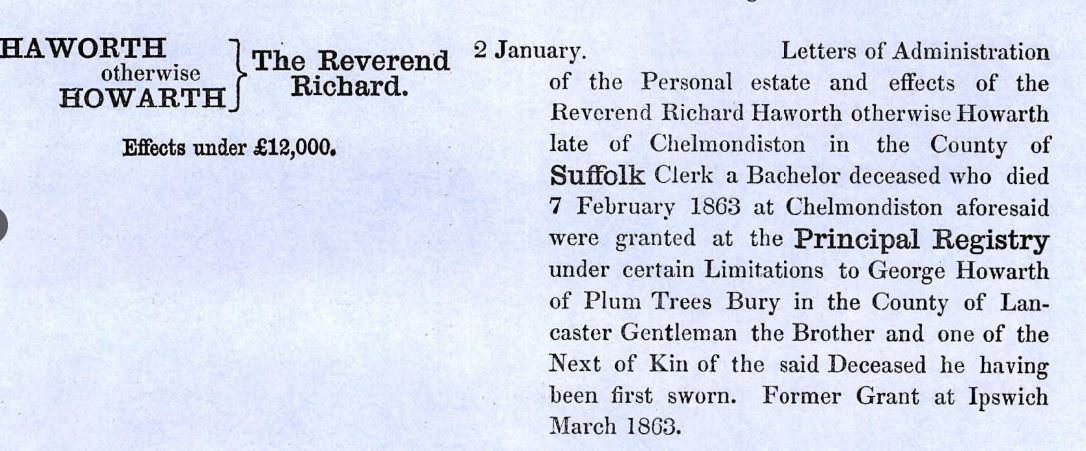
The story sounds unlikely, but a quick look at the 1861 census shows the Reverend living at the Rectory with one servant.  He died a bachelor on 7th February 1863 and letters of administration granted personal estate and effects to his brother George.  So far, so good.  However, an article in the Cambridge Independent Press on 23 May 1863 describes a court case resulting when an anonymous letter containing the missing will turned up at the home of his relative James Haworth. The will, drawn up and executed by the Reverend Haworth’s nephew Richard was partly burned and torn. The judge viewed the will with great suspicion, as there was no indication of how it got burned, and whether the damage constituted cancellation. He postponed the case with instructions that it could not proceed without the collection of further evidence.  And that’s where my investigation ends.  I can’t find any other articles to prove what happened next.   

However, an 1884 newspaper cutting shows a list of large, unclaimed fortunes, one of which is in the name of Haworth.  Mysteriously, the final paragraph of the Bury & Norwich Post article explains the lack of progress in the case stating that the judge who tried the issue died suddenly at the most critical point.  This is true – he did.  Justice Cresswell died in office on 29 Jul 1863 from complications arising from a fall from his horse.