The Sinister Side of the Everyday

Ordinary life is endlessly fascinating, from the quiet hum of a communal meeting place to the clink of teacups in a village cafe or the ice cream van on a sleepy suburban street. These moments are so familiarly innocuous that we rarely stop to wonder what might lurk beneath them.

And that’s where the story begins.

As a crime and mystery writer, I find the most chilling tales don’t begin with bloodshed or bodies — they start with routine. With predictable lives, bordering on tedious, until something unravels. A misstep. A secret. A person who doesn’t quite belong. Or, in my book, The Girl In Flat Three, a smell that won’t go away. Suddenly, the cosy becomes claustrophobic. The familiar feels foreign. And the ordinary becomes the stage for something much darker.

This genre is sometimes called domestic noir, but isn’t it more appropriately named as the sinister ordinary? A genre that encourages the reader to look closer — to examine the kind neighbour, the spotless home, the polite hotel guest. To question the noises coming from the flat above? These aren’t gothic castles or abandoned warehouses. They are places we inhabit. And that’s what makes them dangerous.

Real suspense begins not in the extraordinary but in the almost possible. In the idea that the person who checks your fire alarms might plant something more lethal. That the inoffensive man in the supermarket queue isn’t browsing so much as stalking. It’s that sliver of doubt, once introduced, that swiftly spreads its tentacles.

I read and write in that moment — identifying the split second when everything shifts. A once locked door left ajar, a misplaced object that shouldn’t be there. A silence that lasts a little too long.

We live in a world built on habits and expectations. Most days follow a script. But it’s in the unscripted where that stories take shape.

So pay attention next time you’re in a hotel or walking down a familiar street. Notice the shadows. Watch for the hesitation in someone’s smile. The sinister doesn’t always arrive with a mask and knife held aloft. Sometimes, it wears a name badge and offers to change your towels.

The Devil comes to Bylands – Book Three in The Denman & Tallis Cotswold Crime Series coming later this year.

Crime Writers’ Association

I’m proud to post that I am now a member of The Crime Writers’ Association, an aspiration I’ve held for many years. This prestigious organisation, founded in 1953, represents all kinds of crime writers, from psychological to thriller and cosy to supernatural – a good thing, as my cross-genre writing encompasses all the above!


And I’m in good company among best-selling authors like Rachel Abbott, Angela Marsons and M W Craven, to name but a few. It’s good to belong, and in the fullness of time, I hope to attend one of their regular conferences.


Talking of which, the SPF Conference is almost here in its regular venue at The Southbank Centre. Now in its third year, I’ll be there again, catching up with author friends and gaining valuable insight on self-publishing matters. Perhaps I’ll even learn what makes the ever-changing Amazon algorithms tick!

Click the link to check out my CWA author page https://thecwa.co.uk/find-an-author/beard-jacqueline

Common Forms of Mystery Fiction

A Guest Post by Alex Fairweather

Common Tropes of Mystery Fiction

The mystery Fiction genre involves strange or mysterious happenings driving the story forward. These events often occur while the protagonist attempts to solve a mystery, find a murderer or resolve a supernatural puzzle. The mystery genre has been thriving since the Golden Age of Agatha Christie and her peers, leaving Detective Mystery firmly cemented into the world of fiction writing.  Mystery books were soon rife with repeatedly used tropes, some to impressive effect and others to the point of ridicule, promoting some excellent parodies of mystery tales. This article looks at common tropes from the mystery genre, discussing their use and whether writers should avoid them. 

The Basic Classes of Mystery

Three basic classes of mystery novel include the Fair-Play Whodunnit, the Clueless Mystery, and the Reverse Whodunnit. In the Fair-Play Whodunnit, the reader, knows what the detective knows, gaining clues as the detective finds them. A sharp mind will find a moment in the plot where there is enough information to solve the mystery before the detective does. The opposite is true with the Clueless Mystery where the reader has insufficient information to solve the problem. Finally, the Reverse Whodunnit is possibly the most exciting form of mystery. The reader knows the who, what and why from the beginning of the story, potentially having more information than the detective ever finds out. The plot becomes a nail-biting tale focused on figuring out how the detective solves a perfect crime. Isaac Asimov’s The Singing Bell and The Dust of Death short stories follow this class, with the reader watching the murder happen first before being introduced to the detective as the investigation begins. 

The Subgenres

Some familiar mystery subgenres include Amateur Sleuth, Cozy Mystery, Great Detective, and Historical Detective Fiction. Cosy mysteries tend to downplay violence with the crime occurring in a small, intimate community. Agatha Christie’s famous Miss Marple is a classic example of this subgenre, with a little old lady in a small village turning detective. And continuing in the theme of Christie is the Great Detective, a classic character relying on their powers of deduction, insight, or education to solve cases. Who better to exemplify this stereotype than the great Belgian detective Hercule Poirot, possibly the most well-known character of Christie’s repertoire? His ability to solve crimes quickly using intellect makes him a stand-out detective who Christie further sets apart by characterizing him with a signature moustache and a peculiar gait. The Amateur Sleuth is an untrained detective with no legal background who ends up crime-solving by accident. These budding investigators can inhabit any genre, sometimes venturing into the paranormal like the astral travelling Constance Maxwell. And let’s not forget the Historical Detective Fiction subgenre concerning mystery stories set in the past, like the indefatigable Sherlock Holmes with his ever-reliable sidekick, Dr Watson. 

The Tropes

So those are the genres, but what are the tropes? Listing every trope would take too much time, as they are ever-growing and move with the times. Which are the most common, and will they last in the future?

Eagle-Eye Detection: This trope intrinsically links to Arthur Conan Doyle’s Sherlock Holmes and Agatha Christie’s Poirot. Both detectives rely on observing otherwise-unnoticed clues to solve their mysteries, often confounding the police. Hidden weapons, shards of glass and other less obvious clues can lead to the Eagle-Eyed Detective solving the case with very little else to go on. Eagle-Eyed Detection is often confused with Awesomeness by Analysis, of which Sherlock Holmes is the patron saint. This trope relies on the protagonist running calculations and theories in their head to come to an instant result, surpassing most human capability. Both tropes make the protagonist seem intellectually superior but can give the feeling of a contrived solution. For that reason, it is wise to use Eagle-Eye Detection reservedly, especially in modern media.

Everyone Is a Suspect: One of Poirot’s most famous stories, Death on the Nile, places the victim on a boat surrounded by enemies, making every character a possible suspect. The Everyone Is a Suspect trope turns a mystery into an edge-of-the-seat thriller if used correctly. Nobody knows who the murderer is or if they will strike again. Some authors include the detective as a suspect to make this trope even more effective. 

Never Suicide: A common trope in mystery novels is where a death first ruled as suicide becomes an act of murder. Unfortunately, overuse of this trope can render it dull, but given a slow, sinister pace, it can transform from a standard story beat into an unexpected twist.

Thriller on the Express: An easily guessable trope, the Thriller on the Express involves a mystery occurring on a train, notably featured in Murder on the Orient Express. Equally famous is From Russia with Love, in which international superspy James Bond survives a deadly assassination attempt by Red Grant. Modern stories often subvert the Thriller on the Express trope, perhaps by finding a body on a train with the murder committed elsewhere.

Should authors avoid tropes?

Unlike a cliché which is an overused idea that has become stale, a trope is a story building device. Though frequently found, effective use of tropes creates compelling stories, and it is perfectly acceptable to recycle them. Readers like to know what they are getting and often search for a particular trope to satisfy their needs. But like anything, tropes can go in and out of fashion. Regardless, they are here to stay.

What are your favourite tropes and why? 

A Grave Mistake

It’s raining today, miserable, and a good time for catching up with administration. I’ve just cleared out my writing files, cringing with embarrassment at my earliest efforts, but discovering other long-forgotten favourites like the flash fiction story below written for the 2018 Noirwich Crime competition. I’m fond of this piece. My lovely and sadly departed mother came from Overstrand, and her grandfather, Frederick Dennis, dug the first grave in the cemetery. As the short story says, by a quirk of fate, he ended up in it. The Cotswolds where I live are delightful, but I miss Norfolk, especially on days like these. Days where a brisk walk across the cliffs clears the cobwebs and soothes the soul. This story is for my mum and my Overstrand relatives & ancestors.

Rumour has it that old man Dennis dug the first grave in Overstrand cemetery. By a quirk of fate, he died soon after, and they laid him to rest there. It made me mindful of my mortality—no pauper’s grave for me. I signed up to the North Norfolk burial club sharpish together with the wife and nippers. We went hungry sometimes but always paid our dues. Better to starve than end up in the workhouse; better to shiver and have a decent final resting place.

But that was then.

Ten years on, and I long to dine on food not dragged from the ocean, warm my feet by a blazing fire, be my own man and make my own choices. No more turbulent seas, blistering chills, beaches dotted with crab pots. And no more Florrie.

My heart alive, but she was beautiful once. Her smile dazzled. I would have laid down my life to protect my Florrie. Now she is a hard-faced lump of a woman. Lazy too. She spends all day mardling with the fishwives and has no time for me.

Bessie Storey does, though. Little doe-eyed Bessie, younger and prettier than Florrie, has made no secret of her regard. Bessie is from a large family. She’ll make a good mother for my children.

‘Hold you hard,’ I hear you say. ‘Is poor Florrie dead?’

Not dead yet, but soon. There is money aplenty in the burial club and still more besides in our life insurance policies. Money scrimped and saved from my toil at sea – money I could have spent on ale, like every other red-blooded man – wasted, like my life.

Look, here comes Florrie now, plodding over the cliffs, her dumpling face set in its usual frown, demeanour as predictable as her Friday evening walk. Always the same routine. She visits her mother in Paul’s Lane before lumbering down to the cliffs, where she waits silently, staring out to sea. But why?

Florrie has seen me. She lifts her hand uncertainly and waves it in my direction. Her face, a mask of misery, shows no pleasure in my presence. What does she make of my intrusion? No matter. One minute or two – soon, she will be close enough. I will sidle towards her, smile and give her a little shove. The moment is perfect. It’s close to dusk, and there is not a soul around.

Florrie reaches me, piggy eyes searching my face. There are bristles on her chin. How did I ever love this woman?

It is time.

I move towards her but suddenly feel a weighty thud on my chest, then fall backwards, arms flailing. The Overstrand cliffs rush past me. I can smell the salty sea and hear the cackle of gulls–but is it? No, the sound is raucous laughter, and it’s coming from Florrie. I cannot see her, but before the world goes black, I sense her looking down at me, smiling as she did when we were young.

Writing Inspiration

It’s no secret that historical newspaper reports inspire my books. After all, there’s nothing quite as strange as the truth. In fact, the first book in the Lawrence Harpham series came from an article only a few paragraphs long. In short, I collect interesting stories from which books evolve.  I haven’t done anything with the account below – yet. But as the fire occurred in my ancestral village of Northrepps and George Woodhouse is in my family tree, it has all the components for one of my novels. That said, it’s important to acknowledge the real tragedies behind these stories. Many writers use famous historical characters, but I like to write about people seldom known outside their family and friendship groups. Yet there’s a fine balancing act between a good story, and treating our ancestors with respect, especially with the current popularity for genealogy. And it’s worth considering that people who lived their lives quietly and unobtrusively might be horrified to find themselves the subject of fiction if only they had known.

Norfolk News 17th December 1881

Northrepps – a sad case of burning.

A painful case of burning happened in this village on Tuesday night last, resulting in the death of Mrs F Golden.  The facts in connection with the sad occurrence, as they came before the deputy coroner Mr W H Scott, at an inquest held on Wednesday at the White Horse Overstrand, are as follows. On the night in question, sparks were seen going up from Mr Golden’s chimney by several persons, and an alarm was raised that the house was on fire.  Two men, Henry Jarvis and George Woodhouse entered by the back door and saw a fire on the hearth in the sitting room.

Woodhouse obtained three pails of water and threw upon the burning matter, which was found to be the body of the deceased.  The flames had devoured all the clothing, leaving the body completely charred.  A chair was found near the fireplace very much burnt.  Jane Bane, a domestic servant, said she last saw the deceased at about half-past seven when she had to leave to go out.  Mr Golden was away from home, and the deceased was left alone seated on a chair before the fire in the sitting room.  She was in her usual health.  There was no lamp of any kind, but one candle burning on the table, and a small coal fire.

Deceased was in front of the fire with her feet, as witness believed resting on the fender.  She did not appear either tired or sleepy.  The jury returned a verdict of “Accidental death by burning.” Deceased was 57 years of age.

As a fiction writer, I can’t take this article at face value and my default position is to suspect foul play. Why was Mrs Golden unable to get to safety? Did she try to escape? And if not, why not? Could supernatural forces be at work? Perhaps she was a victim of spontaneous combustion. There are so many why’s in this small piece.

I haven’t written the story yet, but I will. And that’s how my books begin, one news story at a time.

The Felsham Affair – Kindle ebook available on Pre-Order

A Lawrence Harpham MysteryThe Felsham Affair is available for pre-order in the Amazon kindle store with a release date of 20th September.  The paperback version will be ready soon after, but invariably takes a little while longer. I will post the link when the paperback is available for purchase.

This Felsham Affair is set in Suffolk and East London. As usual, it is based on real historical crimes.

When a much-loved child disappears with his minder, Lawrence Harpham follows the trail to Battersea. Meanwhile, Violet investigates a thirty-year-old Suffolk poisoning.

With suspects thin on the ground, Violet must use every means at her disposal to solve the mystery.  Can Lawrence’s close encounter with a callous serial killer provide clues to her investigation? And will their increasingly fractured relationship stand in the way of progress?

As the two mysteries converge, Lawrence finds himself at the mercy of a predator. Can he survive and will he ever see Violet again?

Click here to pre-order The Felsham Affair from the Amazon Kindle store.


Where in the World #2

The fourth book in the Lawrence Harpham mystery series is finished and with my fabulous editor. Once again, it’s set in East Anglia – but where?

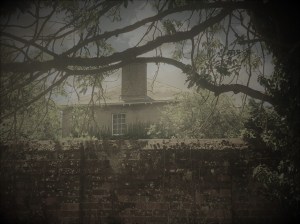
To solve this riddle, you’ll need to be familiar with The Lawrence Harpham series (unless you recognise the photographs taken this weekend).


My first is in Fressingfield, but never in witch

My second’s in mere, but it isn’t in ditch

My third can be found in my leading man’s name

My fourth’s in his partner’s, but isn’t the same

My fifth is in fish, but it isn’t in kipper

My sixth is in Jack, but is absent from Ripper

My seventh’s a mystery, short, sweet and merry

My whole is a village to the south-east of Bury.


Where am I?

Suffolk village mystery

A Writer’s Life – Challenging Times

It’s been a year of ups and downs – one where self-help books and gin seemed like the only answer. A year where insurmountable obstacles appeared from nowhere and navigating them became a way of life. Mum died unexpectedly in February, closely followed by my mother-in-law in law, and four weeks ago, I came within a whisker of losing Dad.  Other people I know have been through worse during these uncertain and challenging months, and in many ways, it’s brought out the best in people. I’ve witnessed frequent and humbling acts of kindness.

Concentration is vital for writers and never easy when emotions are high, so I took a few weeks out of my busy schedule to ease the pressure. My carefully constructed diary is now full of red lines, and I’m a month behind on all my goals. Attending to my poor excuse of a mailing list and other planned projects has fallen by the wayside.  But life goes on, and it’s time to consolidate and move forwards. Assuming there are no further curveballs, here’s the plan for the rest of the year.

I’ve recently released the first three books in the Lawrence Harpham series as an Amazon Kindle ebook boxset for anyone who likes to binge read their mysteries! I will also re-release an updated version of Vote for Murder with a professional cover and not the hideous version I designed in my early years as a writer. This will be ready by autumn.

I’ll be completing book four in the Lawrence Harpham mystery series in the next week. After time with the editor, it should be available in ebook and paperback in a couple of months. Book five is in the plotting stage, and I’m hoping to finish writing it by the end of the year for release in early 2021.

And the final piece of news is for those of you who prefer listening to reading. I have signed an audiobook deal with the UK’s largest audio producer W F Howes for audio rights to The Fressingfield Witch, The Ripper Deception and The Scole Confession. The recording is underway with book one provisionally due at the end of September, book two in October and book three in November.  It has been an absolute pleasure to deal with the acquisitions editor, Craig Thomson and his team and I wish all my business dealings ran as smoothly as this one.

Hopefully, the second half of the year will be an improvement on the first!


Writing Inspiration – Family History

Sufragette NewspaperI’m often asked where the inspiration for my books comes from, and it’s not difficult to answer. The antics of my ancestors inspire me. Other people have illustrious forebears. Mine are mad, bad and often dangerous to know. My family tree has over fifty-five thousand individuals, and it’s still growing, so there’s plenty to go at.

My first book, Vote for Murder, was inspired by the execution of Mary Emily Cage in 1851. Mary was hanged after poisoning her husband James with arsenic, and she may have killed several of her children. An admitted sinner and adulteress, Mary denied murdering her husband and went to her death without confessing. She was condemned by the press who reported every detail of her misconduct without any consideration for her circumstances. But Mary was a victim of domestic abuse. James Cage had already been imprisoned for his ill-treatment of her while under the influence of alcohol. The family were destitute and in desperate need. In another century, there would have been more sympathy for her situation.

Blue Plaque - Constance Andrews IpswichAround the time that I discovered my relationship (through marriage) to Mary Cage, I also found several suffragists in my family tree. They were peaceful activists, and their absence from the 1911 census suggests that they were at the census evasion night in The Old Museum, Ipswich organised by prominent Suffolk suffragette Constance Andrews. Both stories fascinated me, and inspired my first adult fiction novel. Naturally, my protagonist in Vote for Murder is a suffragist, and her story weaves together with that of Mary’s to produce a murder mystery set in Victorian and Edwardian Suffolk.

After finishing Vote for Murder, I gave myself a year off without thinking too hard about writing, but my family tree kept growing, and skeleton’s continued to appear. I had long been fascinated by the genealogy of my East Anglian Corben family including the name variants Corbin and Corbyn. Having made a tenuous link back to Corbyn’s in the late 1400s, I found a more recent connection (again by marriage) to Mary Corbyn of Fressingfield. Mary was rumoured to be a witch. Now, an accusation of witchcraft was not unusual in the 1600s, but a rarity in the 1890s. The basis of the allegation was the death of Mary’s grandchild, which was reported in the press as follows:

Alleged Witchcraft in Suffolk. At an inquest held at Fressingfield on Thursday by Mr C W Chaston on the body of a child named Hammond aged 11, weeks, daughter of a labourer, the father and mother stated that they believed the death of the Child was due to the witchcraft of Mrs Corbyn, the Child’s step-grandmother. This woman died a few hours before the Child and stated that the Child would not live long after her. The Child was taken out, and the father stated that he saw smoke issue from its perambulator and that the Child died upon being taken home, the mother stating that it was hot and dry, and smelt of brimstone. The medical evidence went to show that death was due to shock caused by the external application of some irritant, and the jury, in returning a verdict in accordance with the medical evidence said there was not sufficient evidence to show the nature of the irritant. George Corbyn said he was of the opinion that his late wife had the powers of a witch, and he always tried to do what she wanted in consequence.

The Fox & Goose FressingfieldI couldn’t resist using this story as the starting point for the first of my Lawrence Harpham mystery novels, The Fressingfield Witch. A crime had occurred, but without evidence, there was no one to bring to justice. My book would have been very short, but for one thing. Fressingfield already had a witch.

Matthew Hopkins - witch finder generalFaith Mills was a victim of witchcraft accusations from the Suffolk Witch Trials of the 1640s. She was one of the unfortunate women executed on the strength of allegations made by Matthew Hopkins and his Suffolk born colleague, John Stearne. The two men arrived in Fressingfield during the Witch Hunts and stoked up fear of the supernatural in the hope of personal gain. This genuine terror of witchcraft escalated in an atmosphere influenced by religion, politics and the civil war. The victims were mostly, though not always, women and they were exploited by Hopkins and Stearne who deliberately targeted the poor, vulnerable, marginalised or different.

Once again, my book combined stories set in two different eras, this time involving Private Investigator Lawrence Harpham and his business partner Violet Smith.

By the time I began writing the sequel, I was running out of interesting relatives and had started using historical newspapers as the basis for my stories. There is nothing quite as strange as real life, and I have found crimes covered in newspaper articles to be excellent sources of inspiration. The Ripper Deception, Book two in my series, was created from three separate newspaper stories. One featured a miser’s death; one involved a haunted rectory and the final report described the inquest of Frances Coles who may or may not have been a victim of Jack the Ripper. Together, these three true stories created an unusual twist on a common theme.

I have recently published a Christmas short story, The Montpellier Mystery, and the next full-length book in the Lawrence Harpham series, The Scole Confession, has just been released. Both books rely heavily on newspaper coverage of actual events. Both are set in recognisable English towns and those readers so inclined, can identify the real people who were involved in the accounts. If they look closely, they may even find them in their family trees!
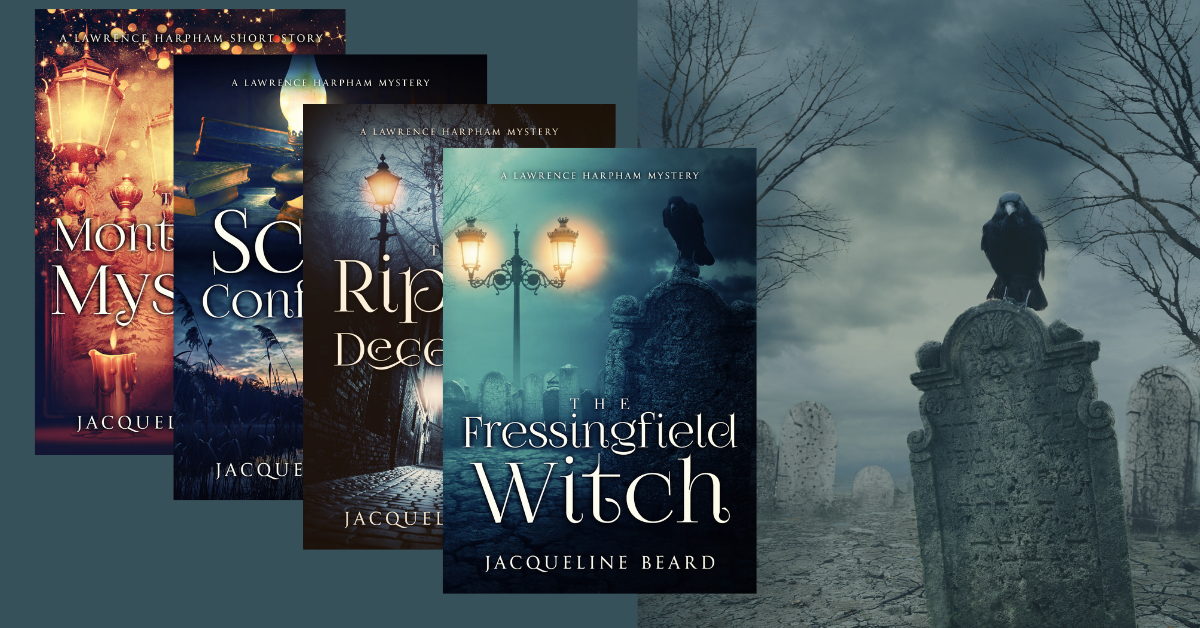
Lawrence Harpham Mystery Series

Contact me on:

Twitter: @jacquibwriter

Facebook: https://www.facebook.com/LawrenceHarpham

Instagram: https://www.instagram.com/jacquib3333/


My Dogs & Other Writing Distractions

The cone brothersIn terms of dogs, the year started badly. My beloved border terrier passed away in his fifteenth year while I was in Suffolk – but this is not a sad tale. Toby had a happy life on the edge of the Cotswolds with more lovely walks than you can shake a stick at and a family who loved him. Though he hated most dogs (it’s a terrier thing), he developed a strong bond with a miniature schnauzer called Benson. They became ‘The Cone Brothers’ when coincidentally injured in the same week and made to wear the cones of shame.39020739_250778318899335_5692707502756462592_n(1)

It has taken until now to consider the prospect of a new dog. My husband works from home, and we already look after several dogs, which made Toby’s loss bearable. Bella, who belongs to my daughter, is the beagle equivalent of Miss World. She is a leggy girl with long eyelashes and ears the colour of burnished brass. She has film star aspirations and over 6000 followers on her Instagram page.

02e743f5-719a-46ce-ba66-8edbeb374dfd (2)


Another household canine distraction comes in the form of the gorgeous Sally, and it’s hard to imagine a more loving dog. Sally belongs to a family friend and started her life in Uganda. She wandered into a local factory as a tiny puppy, was adopted and brought back to England. Sweet natured Sally is calm and affectionate with never so much as a glance in anger. It’s as if she knows how fortunate she has been and is forever grateful.

Two weeks ago, we finally felt ready for another dog of our own. We look after Sally in the day, and Benson and Bella are occasional visitors, so the evenings were dog-free and far too quiet. We steeled ourselves for a long search as my husband wanted a puppy, and I desperately wanted to give a rescue dog a home. In the end, it happened quickly, and we both got what we wanted. Little Teddy, a cockapoo, arrived at The Dog’s Trust when he was only 11 weeks old, a squirming handful of exuberance and joy. Teddy is inquisitive, loving and full of character. He is our forever dog, and we will give him everything a dog could ever want.

The Dog’s Trust is a fantastic organization staffed with dedicated men and women giving love and hope to homeless animals. I can’t speak highly enough of their kindness and patience. Some of their dogs never find homes. I have sponsored one for many years who will never leave his home at the Glasgow Trust. Teddy came from Evesham and is already a huge distraction to my writing life, but worth every moment. My phone is full of photographs, and What’s App buzzes with constant pupdates. He has filled the dog-shaped hole in our lives.

img_0781.jpg