Vote For Murder

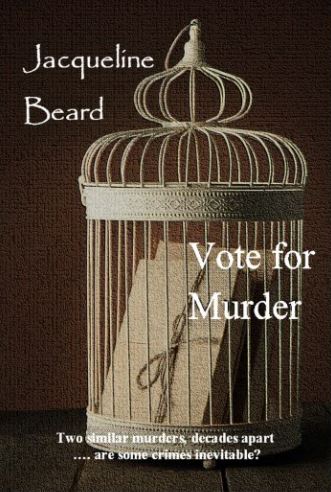
Scandal, Secrets & Suffragettes – Vote for Murder is FREE on Amazon Kindle until 4th March 2022. Get your copy here https://geni.us/VFM2

It’s 1911, and the women of Ipswich are making a peaceful stand against the unfairness of the voting system. Suffragist Louisa Russell joins the census evasion protest at the local museum. While exploring the back rooms, she finds a diary belonging to a prisoner – and not just any prisoner, but the infamous Mary Cage executed for murdering her husband James six decades earlier. When Louisa’s next-door neighbour dies under suspicious circumstances, the parallels between his death and James Cage’s poisoning become impossible to ignore. But can there be a link between two deaths sixty years apart? And will Louisa find the poisoner before an innocent woman is convicted?

Vote for Murder is historical fiction based on a true Suffolk crime.

Suffolk Fiction

aldeburgh-PixabaySuffolk is a glorious place graced with rolling hills, salt marshes and sandy beaches. Charming villages and market towns lie scattered through the countryside while bustling seaside ports adorn the coast. Steeped in history, Suffolk has grown elegantly into the 20th century with towns like Bury Saint Edmunds enjoying the historic Abbey grounds as they blend harmoniously with sympathetically built shopping complexes and other modern structures. The Suffolk landscape is varied and naturally inspirational for writers. At least, it was for me.

My books are usually set in Suffolk. Vote for Murder features both Stonham Aspall and Christchurch Park in Ipswich. The Fressingfield Witch is the first of the Lawrence Harpham Murder Mysteries. Lawrence lives and works at The Buttermarket in Bury Saint Edmunds, where the book begins. Most of the book is set in the village of Fressingfield as the title implies. The second Lawrence Harpham book, The Ripper Deception sees a location change with Lawrence investigating in London and Brighton. Even so, much of the book involves Bury Saint Edmunds, Chelmondiston, and the delights of Pin Mill.

southwold-harbour-Pixabay

The choice of Suffolk as a setting for my books puts me in excellent company. There are many talented Suffolk writers, who will form the subject of a future blog, but this is a piece about books set in Suffolk locations, regardless of heritage.

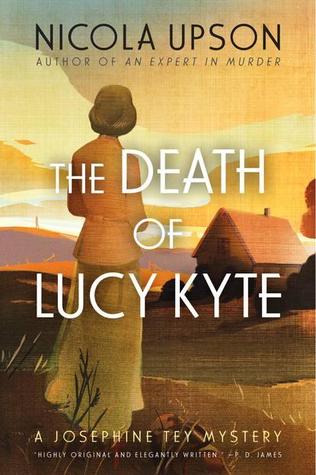
1. The Death of Lucy KyteNicola Upson. I once met Nicola at a crime festival and should have told her that The Death of Lucy The Death of Lucy Kyte.jpgKyte inspired my first book. I have always been fascinated by true crime and mystery books are my favourite genre. With East Anglian heritage and a love of history, this Suffolk mystery was always going to please. The fifth of the Josephine Tey novels, The Death of Lucy Kyte centres around the infamous Red Barn Murder in the village of Polstead where Maria Marten died. It was a fabulous read that I can highly recommend.
2. The Town House – Nora Lofts. Set in Bury Saint Edmunds and featuring 14th-century blacksmith, Martin Reed, The Town House is the first of a Suffolk trilogy. Embarrassingly, I haven’t read anything by by Nora Lofts but The Town House  will be going straight to the top of my TBR pile.
3. We Didn’t Mean to go to Sea – Arthur Ransome. An enchanting children’s adventure set at Pin Mill on the banks of the River Orwell. I have read (and still own) the Swallows and Amazon’s books and have spent many happy moments on the Shotley Peninsula.
4. A Warning to the Curious – M R James. I haven’t read this yet, but I will. Set in the fictional town of Seaburgh, this short ghost story is reputedly dripping with atmosphere and supernatural tension. Seaburgh is evidently recognisable as Aldeburgh, and the author has taken great pains to describe his surroundings.
5. Children of Men – P D James. “…Early this morning, three minutes after midnight, the last human to be born on earth was killed in a pub brawl”. So begins the compelling opening to a book which later became a movie. I watched the film a few years ago with no idea of the Southwold setting. A dystopian book about the effects of male infertility, the premise of the novel is fascinating and terrifying in equal measures. It is quite a departure from the author’s Adam Dalgleish novels. Gallowglass
6. Gallowglass – Ruth Rendell writing as Barbara Vine. No Suffolk book list would be complete without the inclusion of Ruth Rendell who not only lived in Suffolk but set many of her books within its varied landscapes. Psychological mystery thriller Gallowglass features the town of Sudbury, and this book will also be joining my TBR list.

PIle of Books

Location #1 – Christchurch Park

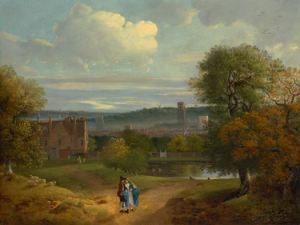
View of Ipswich from Christchurch Park GainsboroughVote for Murder is set in two main locations; Stonham Aspal during 1851 and Christchurch Park, Ipswich in Edwardian times.  Suffragette Louisa Russell, cousin of Millicent Fawcett, lives in Ivry Road on the outskirts of Christchurch Park.  These two areas, together with Henley Road and Fonnereau Road, account for many settings within the book.

Christchurch Park was the former site of an Augustinian Priory disbanded by Henry Viii during the dissolution of the monasteries.  It was acquired in 1545 by Edmund Withipoll and later in the 18th century, by Claude Fonnereau.  In 1892 Felix Cobbold gave it to the City of Ipswich.

There are various monuments set within Christchurch Park, both the Brett Fountain donated in 1863 and the Burton Drinking fountain, gifted in 1895.  The same year The Cabman’s shelter was moved from Cornhill to Christchurch Park.

Vote for Murder was set in 1911.  One scene in the book describes Louisa walking past the Martyr’s Memorial:

“…The cross-topped monument stretched skywards casting a lanky shadow over the path ahead. Recently completed, the carved round pillars caught the light of the morning sun and the carved inscription stood fresh and clear.”

The Martyr’s memorial was erected in 1903 following a campaign through The East Anglian Daily Times to provide a symbol to remember the protestant martyrs.  The Ipswich martyrs were a group of men and women put to death during Queen Mary’s reign for their refusal to recognise the Roman Catholic doctrines.  Many were burned at the stake.  There are nine martyrs named on the memorial, all of whom are mentioned in Foxe’s book of martyrs.  They were reported to have met their deaths with bravery and spirit.

A cenotaph dedicated to the men and women who fell in World War I was placed in Christchurch Park in 1924 joining the Boer War memorial erected in 1906.  Further features of the park include a fountain, an ice house and an Arts and Crafts shelter known as ‘The Bandstand’.  Prince Albert visited Christchurch Park in 1851, the same year that Mary Cage was hanged in Ipswich Gaol.

Christchurch Mansion, a red brick Tudor House, still houses the museum in which furniture, paintings, and pottery can be found.  Exhibits have a strong Suffolk theme with displays by John Constable and Thomas Gainsborough and cases of Lowestoft porcelain.

Nowadays Christchurch Park is a busy, family orientated area, ideal for indulging in outdoor pursuits, sports and the Arts.  The Park enjoys strong support from The Friends of Christchurch Park.

“Oh may Thy soldiers, faithful, true and bold,
Fight as the saints who nobly fought of old,
And win with them the victor’s crown of gold.
Alleluia.”

(Inscription on the memorial to the Ipswich Martyrs)
Vote For Murder – Sample Extract

“Alfred said he was afraid of this but continued without preamble stating that Mary had been found guilty of murder by poison and would die within a week. There was nothing that could prevent her execution, so any renewal of our friendship would inevitably be of short and painful duration.”

Extract from the diary of Anna Tomkins, August 1851

A short excerpt from Vote for Murder is available here

VIntage  Apothecary Bottle

Vote For Murder – Available Now

Front cover snipIn the Spring of 1911, suffragist Louisa Russell finds an old diary in a box of artefacts, while attending a census evasion night at the Old Museum in Ipswich. The diary recounts the last days of Mary Emily Cage, executed for the murder of her husband six decades earlier.

When Louisa’s next door neighbour, Charles Drummond, dies under suspicious circumstances, the parallels between the two deaths become impossible to ignore.  But can two deaths sixty years apart be linked?  And can Louisa find the poisoner before an innocent woman is convicted?

Vote for murder is based on a real poisoning by Suffolk murderess, Mary Cage.  Set in Ipswich in 1911, the novel brings together suffragism in the early 1900’s and a grisly, Victorian murder. Vote for Murder will appeal to readers of historical fiction, genealogical mysteries and Suffolk based crime books.

Available in the Amazon Kindle store now http://tinyurl.com/pbpzehr and will follow in paperback shortly.

Coming Soon…….

Vote For Murder

Front cover snipIn the Spring of 1911, suffragist Louisa Russell finds an old diary in a box of artefacts, while attending a census evasion night at the Old Museum in Ipswich. The diary recounts the last days of Mary Emily Cage, executed for the murder of her husband six decades earlier.

When Louisa’s next door neighbour, Charles Drummond, dies under suspicious circumstances, the parallels between the two deaths become impossible to ignore.  But can two deaths sixty years apart be linked?  And can Louisa find the poisoner before an innocent woman is convicted?


Vote for murder is based on a real poisoning by Suffolk murderess, Mary Cage.  Set in Ipswich in 1911, the novel brings together suffragism in the early 1900’s and a grisly, Victorian murder. Due for publication at the end of September, Vote for Murder will appeal to readers of historical fiction, genealogical mysteries and Suffolk based crime books.