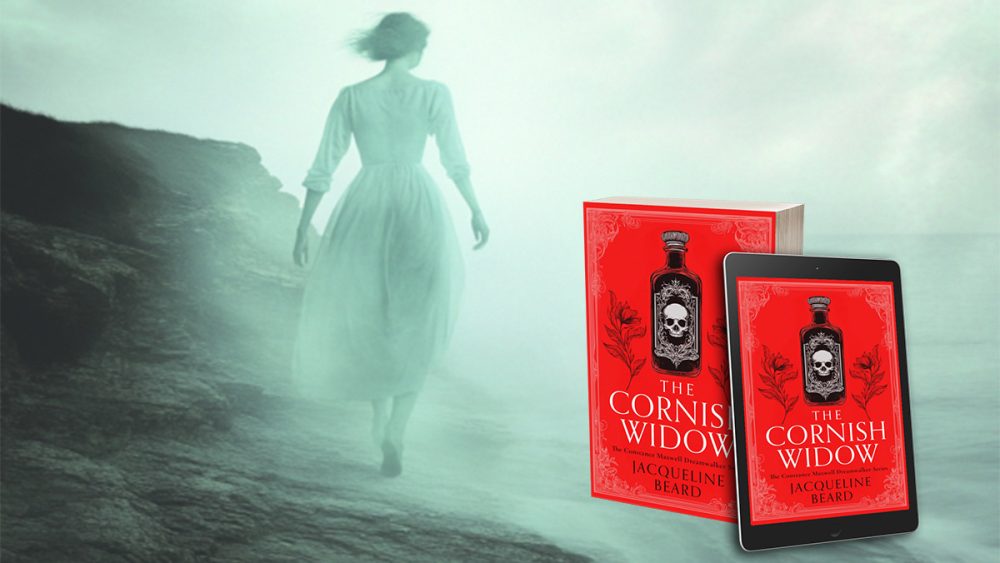
She’s Back! Constance Maxwell Returns in The Cheltenham Torso – Available for Pre-order Now

🌟  Constance Maxwell: The Dreamwalker Series 🌟

Step into a world where dreams and reality collide, where mysteries unravel in the most unexpected ways, and where one woman’s extraordinary gift takes her on adventures beyond imagination. Welcome to the Constance Maxwell Dreamwalker Series—a gripping blend of historical fiction, supernatural intrigue, and heart-pounding suspense.

📖 About the Series:
Constance Maxwell is no ordinary woman. With the unique ability to astral travel, she finds herself drawn into a web of secrets, danger, and otherworldly phenomena. From the sleepy streets of coastal Cornwall to the eerie landscapes of the dream realm, Constance’s journey is one of courage, discovery, and resilience. Each book, featuring historical true crimes, delves deeper into her mysterious origins, blending rich historical detail with spine-tingling twists that will keep you hooked from the first page to the last.

🔥 Latest Release: The Cheltenham Torso (Book 4)
The fourth instalment in the series, The Cheltenham Torso, launches on 26th February, and it’s Constance’s most thrilling adventure yet.

Grief-stricken after Vera’s death, Connie has left dreamwalking behind. But as World War II casts its shadow over England, secrets brew beneath the surface of sleepy Cornwall—and Crossley, the rogue occultist, has vanished into hiding.

When the psychic division recruits Crossley as a double agent, Cora spirits Connie away to Cheltenham. What begins as a refuge quickly spirals into danger, thrusting Connie into a web of intrigue and an unexpected murder mystery.

As Crossley resurfaces with plans to unleash his most audacious occult feat, Connie faces perilous choice. Can she unravel the truth behind the murder and stay one step ahead of Crossley’s sinister designs? And what of the enigmatic figure who has suddenly returned to her life—friend or foe?

✨ Why You’ll Love the Series:

  • A strong, relatable protagonist with a unique gift
  • A perfect blend of history, mystery, and the supernatural
  • Twists and turns that will keep you guessing until the very end
  • Rich, immersive storytelling that transports you to another time and place


Don’t miss the release of The Cheltenham Torso on 26th February. Whether you’re a longtime fan of Constance Maxwell or new to the series, this is the perfect time to dive into her world.

All Things Victorian

Love the Victorian Period? Ready to try a new book? Then look no further.

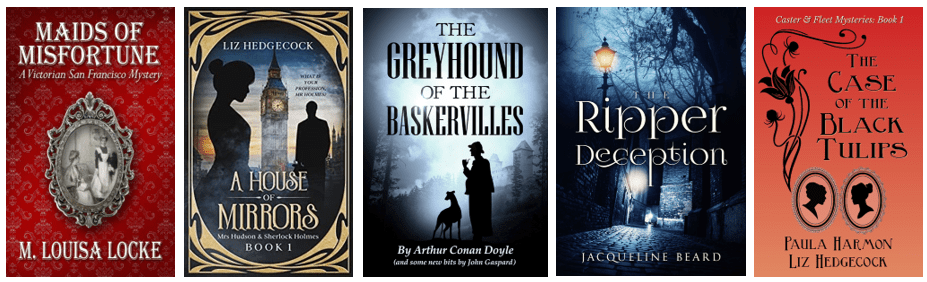
Click here for a curated selection of Victorian fiction offerings by best selling mystery and romance authors including:

John Gaspard

Liz Hedgecock

Jacqueline Beard

M Louisa Locke

Paula Harmon

And many other authors

Common Forms of Mystery Fiction

A Guest Post by Alex Fairweather

Common Tropes of Mystery Fiction

The mystery Fiction genre involves strange or mysterious happenings driving the story forward. These events often occur while the protagonist attempts to solve a mystery, find a murderer or resolve a supernatural puzzle. The mystery genre has been thriving since the Golden Age of Agatha Christie and her peers, leaving Detective Mystery firmly cemented into the world of fiction writing.  Mystery books were soon rife with repeatedly used tropes, some to impressive effect and others to the point of ridicule, promoting some excellent parodies of mystery tales. This article looks at common tropes from the mystery genre, discussing their use and whether writers should avoid them. 

The Basic Classes of Mystery

Three basic classes of mystery novel include the Fair-Play Whodunnit, the Clueless Mystery, and the Reverse Whodunnit. In the Fair-Play Whodunnit, the reader, knows what the detective knows, gaining clues as the detective finds them. A sharp mind will find a moment in the plot where there is enough information to solve the mystery before the detective does. The opposite is true with the Clueless Mystery where the reader has insufficient information to solve the problem. Finally, the Reverse Whodunnit is possibly the most exciting form of mystery. The reader knows the who, what and why from the beginning of the story, potentially having more information than the detective ever finds out. The plot becomes a nail-biting tale focused on figuring out how the detective solves a perfect crime. Isaac Asimov’s The Singing Bell and The Dust of Death short stories follow this class, with the reader watching the murder happen first before being introduced to the detective as the investigation begins. 

The Subgenres

Some familiar mystery subgenres include Amateur Sleuth, Cozy Mystery, Great Detective, and Historical Detective Fiction. Cosy mysteries tend to downplay violence with the crime occurring in a small, intimate community. Agatha Christie’s famous Miss Marple is a classic example of this subgenre, with a little old lady in a small village turning detective. And continuing in the theme of Christie is the Great Detective, a classic character relying on their powers of deduction, insight, or education to solve cases. Who better to exemplify this stereotype than the great Belgian detective Hercule Poirot, possibly the most well-known character of Christie’s repertoire? His ability to solve crimes quickly using intellect makes him a stand-out detective who Christie further sets apart by characterizing him with a signature moustache and a peculiar gait. The Amateur Sleuth is an untrained detective with no legal background who ends up crime-solving by accident. These budding investigators can inhabit any genre, sometimes venturing into the paranormal like the astral travelling Constance Maxwell. And let’s not forget the Historical Detective Fiction subgenre concerning mystery stories set in the past, like the indefatigable Sherlock Holmes with his ever-reliable sidekick, Dr Watson. 

The Tropes

So those are the genres, but what are the tropes? Listing every trope would take too much time, as they are ever-growing and move with the times. Which are the most common, and will they last in the future?

Eagle-Eye Detection: This trope intrinsically links to Arthur Conan Doyle’s Sherlock Holmes and Agatha Christie’s Poirot. Both detectives rely on observing otherwise-unnoticed clues to solve their mysteries, often confounding the police. Hidden weapons, shards of glass and other less obvious clues can lead to the Eagle-Eyed Detective solving the case with very little else to go on. Eagle-Eyed Detection is often confused with Awesomeness by Analysis, of which Sherlock Holmes is the patron saint. This trope relies on the protagonist running calculations and theories in their head to come to an instant result, surpassing most human capability. Both tropes make the protagonist seem intellectually superior but can give the feeling of a contrived solution. For that reason, it is wise to use Eagle-Eye Detection reservedly, especially in modern media.

Everyone Is a Suspect: One of Poirot’s most famous stories, Death on the Nile, places the victim on a boat surrounded by enemies, making every character a possible suspect. The Everyone Is a Suspect trope turns a mystery into an edge-of-the-seat thriller if used correctly. Nobody knows who the murderer is or if they will strike again. Some authors include the detective as a suspect to make this trope even more effective. 

Never Suicide: A common trope in mystery novels is where a death first ruled as suicide becomes an act of murder. Unfortunately, overuse of this trope can render it dull, but given a slow, sinister pace, it can transform from a standard story beat into an unexpected twist.

Thriller on the Express: An easily guessable trope, the Thriller on the Express involves a mystery occurring on a train, notably featured in Murder on the Orient Express. Equally famous is From Russia with Love, in which international superspy James Bond survives a deadly assassination attempt by Red Grant. Modern stories often subvert the Thriller on the Express trope, perhaps by finding a body on a train with the murder committed elsewhere.

Should authors avoid tropes?

Unlike a cliché which is an overused idea that has become stale, a trope is a story building device. Though frequently found, effective use of tropes creates compelling stories, and it is perfectly acceptable to recycle them. Readers like to know what they are getting and often search for a particular trope to satisfy their needs. But like anything, tropes can go in and out of fashion. Regardless, they are here to stay.

What are your favourite tropes and why? 

The Moving Stone

Now available for pre-order on Amazon Kindle

When a series of vanishings turn into murders, Lawrence Harpham is summoned to West Ham. Estranged from Violet and temporarily partnered with an oddball reporter, Lawrence pursues a ruthless serial killer.

Meanwhile, Violet’s contentment with her new life in Norfolk ends abruptly. What is causing the sinister movement of a gravestone, and who is following her?

Recently revealed secrets shatter everything Lawrence thought he knew about his past. Will Violet and Lawrence meet again? And will he ever recover from the horrifying revelations?

“That’s not what I mean,” gasped the hooded man, before lapsing into a coughing fit.
“Start at the beginning,” said Higgins. “I want every last detail, and if I get it, then you get to keep the rest of your fingers.”

The Moving Stone is a historical murder mystery based on real events. Click here to pre-order your kindle e-book.

Where in the World #2

The fourth book in the Lawrence Harpham mystery series is finished and with my fabulous editor. Once again, it’s set in East Anglia – but where?

To solve this riddle, you’ll need to be familiar with The Lawrence Harpham series (unless you recognise the photographs taken this weekend).


My first is in Fressingfield, but never in witch

My second’s in mere, but it isn’t in ditch

My third can be found in my leading man’s name

My fourth’s in his partner’s, but isn’t the same

My fifth is in fish, but it isn’t in kipper

My sixth is in Jack, but is absent from Ripper

My seventh’s a mystery, short, sweet and merry

My whole is a village to the south-east of Bury.


Where am I?

Suffolk village mystery

Writing Inspiration – Family History

Sufragette NewspaperI’m often asked where the inspiration for my books comes from, and it’s not difficult to answer. The antics of my ancestors inspire me. Other people have illustrious forebears. Mine are mad, bad and often dangerous to know. My family tree has over fifty-five thousand individuals, and it’s still growing, so there’s plenty to go at.

My first book, Vote for Murder, was inspired by the execution of Mary Emily Cage in 1851. Mary was hanged after poisoning her husband James with arsenic, and she may have killed several of her children. An admitted sinner and adulteress, Mary denied murdering her husband and went to her death without confessing. She was condemned by the press who reported every detail of her misconduct without any consideration for her circumstances. But Mary was a victim of domestic abuse. James Cage had already been imprisoned for his ill-treatment of her while under the influence of alcohol. The family were destitute and in desperate need. In another century, there would have been more sympathy for her situation.

Blue Plaque - Constance Andrews IpswichAround the time that I discovered my relationship (through marriage) to Mary Cage, I also found several suffragists in my family tree. They were peaceful activists, and their absence from the 1911 census suggests that they were at the census evasion night in The Old Museum, Ipswich organised by prominent Suffolk suffragette Constance Andrews. Both stories fascinated me, and inspired my first adult fiction novel. Naturally, my protagonist in Vote for Murder is a suffragist, and her story weaves together with that of Mary’s to produce a murder mystery set in Victorian and Edwardian Suffolk.

After finishing Vote for Murder, I gave myself a year off without thinking too hard about writing, but my family tree kept growing, and skeleton’s continued to appear. I had long been fascinated by the genealogy of my East Anglian Corben family including the name variants Corbin and Corbyn. Having made a tenuous link back to Corbyn’s in the late 1400s, I found a more recent connection (again by marriage) to Mary Corbyn of Fressingfield. Mary was rumoured to be a witch. Now, an accusation of witchcraft was not unusual in the 1600s, but a rarity in the 1890s. The basis of the allegation was the death of Mary’s grandchild, which was reported in the press as follows:

Alleged Witchcraft in Suffolk. At an inquest held at Fressingfield on Thursday by Mr C W Chaston on the body of a child named Hammond aged 11, weeks, daughter of a labourer, the father and mother stated that they believed the death of the Child was due to the witchcraft of Mrs Corbyn, the Child’s step-grandmother. This woman died a few hours before the Child and stated that the Child would not live long after her. The Child was taken out, and the father stated that he saw smoke issue from its perambulator and that the Child died upon being taken home, the mother stating that it was hot and dry, and smelt of brimstone. The medical evidence went to show that death was due to shock caused by the external application of some irritant, and the jury, in returning a verdict in accordance with the medical evidence said there was not sufficient evidence to show the nature of the irritant. George Corbyn said he was of the opinion that his late wife had the powers of a witch, and he always tried to do what she wanted in consequence.

The Fox & Goose FressingfieldI couldn’t resist using this story as the starting point for the first of my Lawrence Harpham mystery novels, The Fressingfield Witch. A crime had occurred, but without evidence, there was no one to bring to justice. My book would have been very short, but for one thing. Fressingfield already had a witch.

Matthew Hopkins - witch finder generalFaith Mills was a victim of witchcraft accusations from the Suffolk Witch Trials of the 1640s. She was one of the unfortunate women executed on the strength of allegations made by Matthew Hopkins and his Suffolk born colleague, John Stearne. The two men arrived in Fressingfield during the Witch Hunts and stoked up fear of the supernatural in the hope of personal gain. This genuine terror of witchcraft escalated in an atmosphere influenced by religion, politics and the civil war. The victims were mostly, though not always, women and they were exploited by Hopkins and Stearne who deliberately targeted the poor, vulnerable, marginalised or different.

Once again, my book combined stories set in two different eras, this time involving Private Investigator Lawrence Harpham and his business partner Violet Smith.

By the time I began writing the sequel, I was running out of interesting relatives and had started using historical newspapers as the basis for my stories. There is nothing quite as strange as real life, and I have found crimes covered in newspaper articles to be excellent sources of inspiration. The Ripper Deception, Book two in my series, was created from three separate newspaper stories. One featured a miser’s death; one involved a haunted rectory and the final report described the inquest of Frances Coles who may or may not have been a victim of Jack the Ripper. Together, these three true stories created an unusual twist on a common theme.

I have recently published a Christmas short story, The Montpellier Mystery, and the next full-length book in the Lawrence Harpham series, The Scole Confession, has just been released. Both books rely heavily on newspaper coverage of actual events. Both are set in recognisable English towns and those readers so inclined, can identify the real people who were involved in the accounts. If they look closely, they may even find them in their family trees!
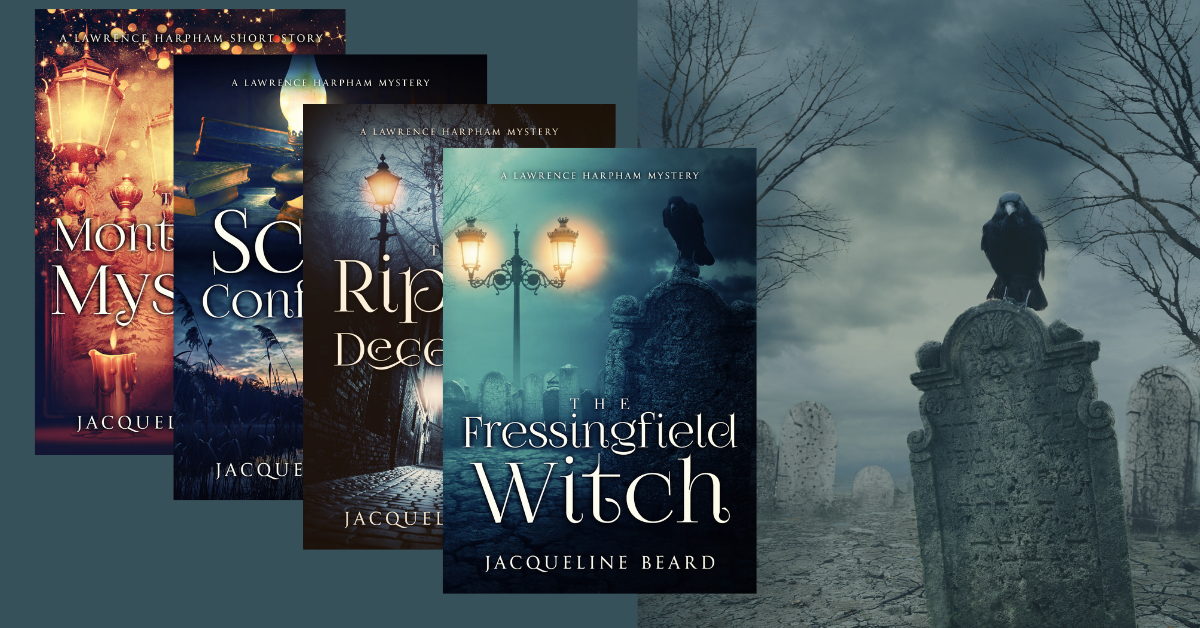
Lawrence Harpham Mystery Series

Contact me on:

Twitter: @jacquibwriter

Facebook: https://www.facebook.com/LawrenceHarpham

Instagram: https://www.instagram.com/jacquib3333/