Calorean Bestiary #5 – Nightslade Hares

Nightslade hares come out at night and feast on the nyam nyam root.  They are several times bigger than normal Calorean hares, have pointed fangs, red eyes and a bad attitude towards intruders.

Through almost closed eyelids he saw a rapid movement in the grass ahead and the biggest hare he had ever seen lurched suddenly through the grass.

“Are they all that big?” exclaimed Beau.

“Mostly,” said Arnold, “although the adults are bigger.”

Red eyes

Calorean Bestiary #4 – Mothmen

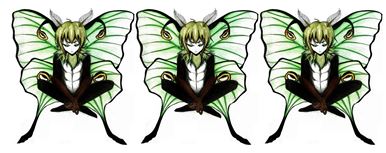
Mothmen are usually found in the Nightslade forest on the edge of Snaggletown.  Renowned for the excessive amount of time they spend on personal grooming, mothmen are impossibly vain, selfish to the core and have few redeeming qualities.

“It’s all right for you,” she said to Arnold. “There seems to be no limit to the amount of preening you do. Don’t you ever get bored?”

“My good looks are no accident” snapped Arnold. “I look good because I bother. It wouldn’t do you any harm to wash your hair.”

Mothman

Calorean Bestiary #3

Man Eating Ray

She took off her boots and stockings. Holding her dress high she waded in. The water was crystal clear. Silver finned fish snaked through bunches of red sea weed and a family of shepherd lobsters marched across the shingle. She watched in fascination as the largest one used its claws to round up a passing gaggle of sea snails.

“Look at this Arnold,” she laughed pointing to the lobsters.

“Most amusing,” he said, looking down the beach.

“What’s that?” he asked pointing to the shore.

“I can’t see anything, “replied Skyle continuing to watch the lobsters at work.

“Look, the beach is moving,” cried Arnold jabbing his finger towards the shore line.

“Well I can’t see……..”

Then suddenly she could see. Almost the entire expanse of the beach trembled momentarily.

“I think we should leave,” she whispered.

Without further warning, the beach shook itself spraying grey sand into the air and hurtled towards the water.

Skyle’s scream pierced the air.

“Run,” she cried tearing across the gravelled floor of the cavern, ripping the soles of her feet as she scrambled up the track.

Arnold joined her at the top of the path and they looked towards the pool. Half in and half out of the water lurked a flat, black, pulsating piscine creature the size of Skyle’s village. Two narrow eyes stared from a spiny head, its long pointed fangs visible even from a distance.

“It’s a man eating ray,” breathed Skyle.Man Eating Ray

Generating a character name from genealogy

Famhist LogoSo, you’ve carefully crafted your plot, nurtured your creation and developed a story.  But what do you call your characters?  Perhaps a name evolves along the way, but if not, where do you turn for inspiration?

Sometimes luck strikes and a name appears out of the blue. In Beau Garnie & the Invisimin Mine, Beau’s best friend Skyle fell into that category. Her name came first and her character was built around the name, but that was an exception. Normally, more thought goes into naming.

Some writers use the telephone directory, some use baby naming books and there are several random name generator sites – some are genre specific.

I didn’t use any of these resources. The approach I took fitted in with another of my interests. As a keen genealogist, I manage a large website containing myriad East Anglian families. The current working database contains over 51,000 individuals so is a rich resource of old English names. Some are commonplace – there are more John Bird’s than you can imagine, but there are also a number of unusual names or names that have fallen from favour.

A lead character in my children’s fantasy novel, Beau Garnie, was shamelessly ‘borrowed’ from a genealogical source. My 11x Great Uncle Nicholas Fairweather worked for the Sheriff of Suffolk, Nicholas Garneys. My character’s name is a variation of that. Beau’s father Gwalter was based on my 10 x Uncle Walter Brook; his name appears as Gwalter in many documents.

There is an extensive choice of names to work with ranging from biblical to those that must surely have been invented. Old male Hebrew names Shedrac, Onesimus, Gad and Jabesh sit side by side in the name index with their female counterparts Jerusha, Kerrenhappuch, Keturah and Salome. Relatives include Methuen (a Scottish name), Ethelbert, Angier and Esmond (Norman) and my East Anglian ancestor Athelstane Nobbs whose name is Anglo-Saxon.

Using a surname as a forename was popular in Suffolk generating combinations like Catling Fairweather, Pells Kersey, Bosom Abbs and Candler Bird. The rarity of such names makes it is easier to find information, particularly in searchable newspaper databases. This in itself generates ideas for backgrounds and stories for characters. I know from records that Rudd Turner murdered his wife and child in 1831 and was subsequently declared insane and that my 4 x great grandfather Minns Riseborough was violently assaulted with a knife by John Buck following accusations of pig stealing.

Genealogy contains wonderful resources for female names too. The ugly sounding Grysigono Smith sounds more like a witch than the heiress she was. Eszma Seago naturally conjures up an unappealing woman, perhaps with a skin complaint. In fact, she married so was probably quite a normal looking girl. Repeniler Barrett’s name is a little too similar to repulsive to invoke a wholesome character. On the other hand, Gallindra Bayfield is a wonderful name that trips off the tongue and is well-suited to a fantasy character, Haidee Mallett sounds joyful and Fairlino Love must have stepped straight out of the pages of a Mills and Boon novel.

I can’t imagine being able to use the obscure ancestral names of Hersee Fosker, Hiwasse Bullock and Thurley Ulph.  They are just too ugly. But I must find a way to work Sebborn Gonner, Pitcher Belding and Barzillai Brighty into one of my books. My favourite name, for reasons I haven’t fathomed, is the wonderfully christened Scapy Tydeman of Earl Stonham in Suffolk. That name is too good to be lost in the mists of time and a character namesake grows in my mind, even as I type…….


Hartley hare – hares in popular culture

Hartley HareI bought a hare at the weekend. Not a real one, of course – just a garden ornament.  I particularly wanted a hare because my children’s book Beau Garnie & the Invisimin Mine features hares throughout. I hoped it might bring inspiration when writing the next book in the trilogy.

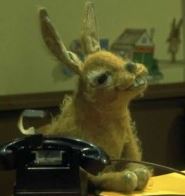
My son wanted to call the hare Septima after Beau’s hare or Bluebell after Skyle’s. He could have called it 13 after the dark coated hare who scampered home to take the Gold chalice in the Calorean hare hurdles, but none of that happened. Instead my husband took one look at it and christened it ‘Hartley’ after the hare in the TV show Pipkins. And the following day, my friend did exactly the same.

It made me wonder about the use of hares in popular culture. There aren’t that many really. Rabbits are wildly popular in literature and television, but hares much less so.   And it seems a peculiarly British choice of animal.

Perhaps one of the better known literary hares is The March Hare from Alice in Wonderland. John Tenniel’s illustration depicts the hare with straw on its head; a sign of madness in Victorian England. The poor March Hare was compelled to behave as if it were always tea time because the Mad Hatter ‘murdered time’ when he sang to the Queen of Hearts.

And who can forget the charming Nutbrown hares from ‘Guess how much I love you’. Although never stated, the hares are thought to be father and son. Little Nutbrown hare declares his love by the width of his arms or the height of his hops and Big Nutbrown hare keeps surpassing this, finishing with the wonderful line “I love you right up to the moon and back.”

Then there’s Jack hare, creation of Kit Williams in his ‘Masquerade’ fantasy puzzle book. Not only was Jack Hare the courier from the moon to the sun, but the treasure itself was a small gold & jewelled amulet hare. Worth about £5000 at the time of publication, the jewelled hare was later sold for £31,900; a great deal more expensive than my new garden hare acquisition.Jack Hare

There being a few other hares to choose from, I’m not sure why my friends and relatives have so decidedly christened our hare Hartley. Perhaps it’s because we are all 1965’ers and Pipkins was part of our growing up. And my intelligent, noble ornamental hare has now taken on the personality of the shaggy eared, moth eaten old hare from the 1970’s. But the hares in Beau Garnie are recently created and not yet well established – 13 and Bluebell don’t exactly trip off the tongue. Perhaps one day in the future, someone will buy a stuffed hare toy and the first name they think of will be Septima.


As Mad as a March Hare……

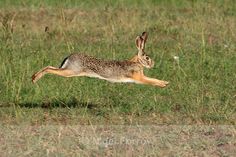
Running hareIn Calorean, the main mode of transport is hare back riding. Not only does Beau get about the realm by hare, but he is also an accomplished jockey and regular competitor in the annual Calorean hare hurdles.

Calorean hares Septima and Bluebell are similar to Lepus Europaeus, the native brown hare of England. This species was introduced to Britain in the Iron Age, originating from the other side of the North Sea.

The brown hare has long, black tipped ears, golden brown fur and a black tipped tail. Accelerating to speeds of 45mph, it’s no wonder that Beau is able to compete so competently on his Calorean equivalent.

Brown hares live in grassland and arable land, dwelling in a small depression in the ground called a form. There, they raise young leverets, feeding them daily on wild grasses and herbs. Brown hares have 2 – 3 litters a year and breed in March and April. The expression “mad as a March hare” comes from the ‘boxing’ displays as the female fends off the male during the mating season.

Bronze hareHares have enjoyed much publicity in Gloucestershire this year with the arrival of the Cirencester Hare Festival over Easter. 25 giant, fibre-glass sculpted hares were created and positioned around Cirencester. It’s well worth a visit to see these beautiful hares, lovingly crafted by local artisans.

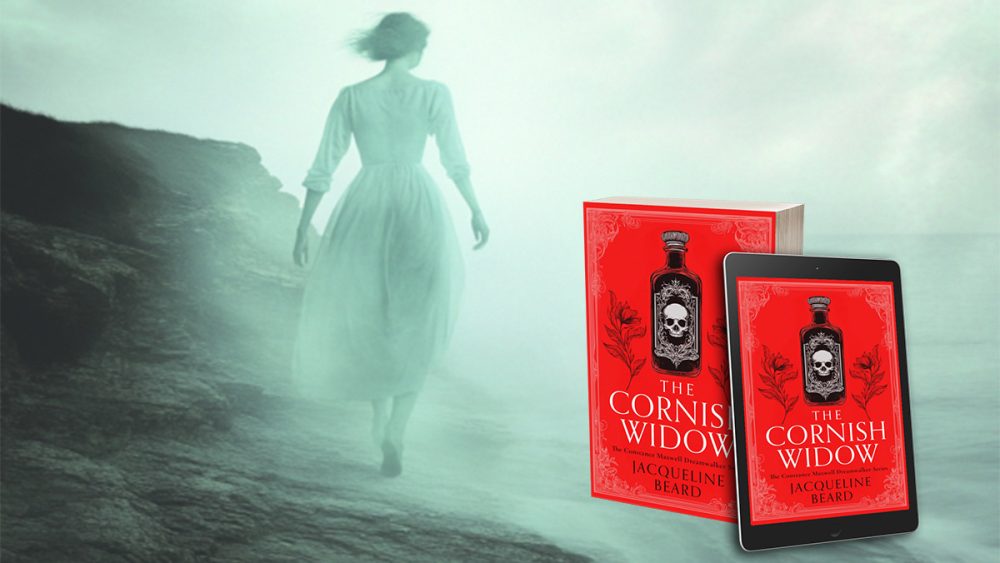
 To read about Beau, Skyle and their beloved hares, click here.  cropped-beau-book-cover13.jpg


Calorean Concepts #1

Quote

Seebling babies do not have unity symbols on their palms, but as they grow to adulthood symbols emerge. The colour of the symbol determines the tribe from which their life partner will come and the shape of the symbol will be identical to that of their future partner. When they discover a Seebling with an identical symbol, they will eventually unite.


“Skyle uncurled her hand. The green fern was well established and sat clearly in the centre of her palm”

Green fern


Calorean Bestiary (1)

Quote

Mushmers

The behaviour of fungi in Calorean varies from village to village.  In the dwarf realm and in Skyle’s village, fungi grows in the ground.  But the fungi in Beau’s village of Lochnar Common moves around freely.

“Skyle felt something move against her leg & looked down to see a collection of tawny coloured mushmers milling around near an old log”

Mushrooms