The Disappearing Doctor

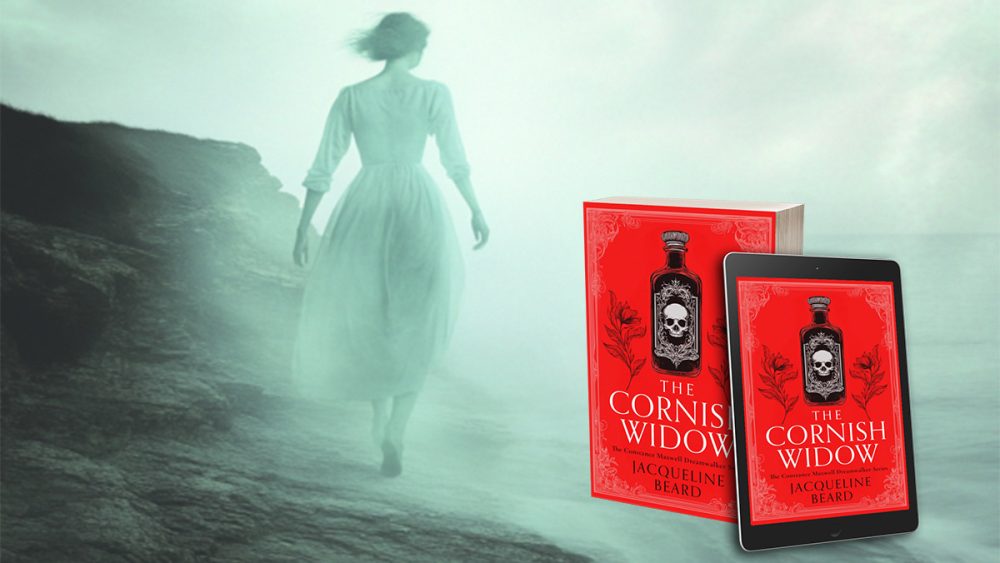
I based this book on twenty-nine-year-old Doctor Sophia Hickman, who vanished in August 1903. Outlandish theories raged in the press about the reasons for her disappearance which I won’t mention here for fear of spoilers! Apart from my fictional solution, I have mostly kept to the facts of the case as described in the newspapers of the time.


Featured also is fraudulent medium Jane Savage, loosely based on Mrs Strutt, the wife of Major Charles Henry Strutt, who attempted to defraud Henry S H Cavendish, a renowned African explorer. Posing as a medium, Mrs Strutt introduced Cavendish to seances, in which she conveyed spiritual messages from his late mother. The Struts seized his fortune, only relinquishing control after a judgement against them in a hearing known as The Planchette Case.


Though primarily set in London and Richmond Park, I couldn’t resist another foray into my beloved home county of Suffolk. This time, the action takes place in the tiny village of Akenham, involving the ancient legend of the Akenham Devil. Walk thirteen times widdershins around the ancient split stone in St Mary’s Church, and the devil will rise, or so they say. Lawrence, naturally, becomes embroiled. But I will say no more for now!

The Disappearing Doctor is available in all good ebook stores by following this link https://books2read.com/u/mYxRdd If you prefer to read physical books, head over to my bookstore.

The Felsham Affair – Kindle ebook available on Pre-Order

A Lawrence Harpham MysteryThe Felsham Affair is available for pre-order in the Amazon kindle store with a release date of 20th September.  The paperback version will be ready soon after, but invariably takes a little while longer. I will post the link when the paperback is available for purchase.

This Felsham Affair is set in Suffolk and East London. As usual, it is based on real historical crimes.

When a much-loved child disappears with his minder, Lawrence Harpham follows the trail to Battersea. Meanwhile, Violet investigates a thirty-year-old Suffolk poisoning.

With suspects thin on the ground, Violet must use every means at her disposal to solve the mystery.  Can Lawrence’s close encounter with a callous serial killer provide clues to her investigation? And will their increasingly fractured relationship stand in the way of progress?

As the two mysteries converge, Lawrence finds himself at the mercy of a predator. Can he survive and will he ever see Violet again?

Click here to pre-order The Felsham Affair from the Amazon Kindle store.


Where in the World #2

The fourth book in the Lawrence Harpham mystery series is finished and with my fabulous editor. Once again, it’s set in East Anglia – but where?

To solve this riddle, you’ll need to be familiar with The Lawrence Harpham series (unless you recognise the photographs taken this weekend).


My first is in Fressingfield, but never in witch

My second’s in mere, but it isn’t in ditch

My third can be found in my leading man’s name

My fourth’s in his partner’s, but isn’t the same

My fifth is in fish, but it isn’t in kipper

My sixth is in Jack, but is absent from Ripper

My seventh’s a mystery, short, sweet and merry

My whole is a village to the south-east of Bury.


Where am I?

Suffolk village mystery

Suffolk Fiction

aldeburgh-PixabaySuffolk is a glorious place graced with rolling hills, salt marshes and sandy beaches. Charming villages and market towns lie scattered through the countryside while bustling seaside ports adorn the coast. Steeped in history, Suffolk has grown elegantly into the 20th century with towns like Bury Saint Edmunds enjoying the historic Abbey grounds as they blend harmoniously with sympathetically built shopping complexes and other modern structures. The Suffolk landscape is varied and naturally inspirational for writers. At least, it was for me.
My books are usually set in Suffolk. Vote for Murder features both Stonham Aspall and Christchurch Park in Ipswich. The Fressingfield Witch is the first of the Lawrence Harpham Murder Mysteries. Lawrence lives and works at The Buttermarket in Bury Saint Edmunds, where the book begins. Most of the book is set in the village of Fressingfield as the title implies. The second Lawrence Harpham book, The Ripper Deception sees a location change with Lawrence investigating in London and Brighton. Even so, much of the book involves Bury Saint Edmunds, Chelmondiston, and the delights of Pin Mill.

southwold-harbour-Pixabay

The choice of Suffolk as a setting for my books puts me in excellent company. There are many talented Suffolk writers, who will form the subject of a future blog, but this is a piece about books set in Suffolk locations, regardless of heritage.

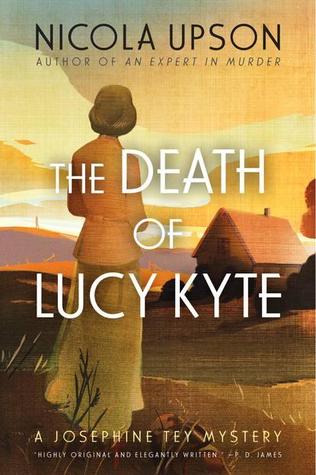
1. The Death of Lucy KyteNicola Upson. I once met Nicola at a crime festival and should have told her that The Death of Lucy The Death of Lucy Kyte.jpgKyte inspired my first book. I have always been fascinated by true crime and mystery books are my favourite genre. With East Anglian heritage and a love of history, this Suffolk mystery was always going to please. The fifth of the Josephine Tey novels, The Death of Lucy Kyte centres around the infamous Red Barn Murder in the village of Polstead where Maria Marten died. It was a fabulous read that I can highly recommend.
2. The Town House – Nora Lofts. Set in Bury Saint Edmunds and featuring 14th-century blacksmith, Martin Reed, The Town House is the first of a Suffolk trilogy. Embarrassingly, I haven’t read anything by by Nora Lofts but The Town House  will be going straight to the top of my TBR pile.
3. We Didn’t Mean to go to Sea – Arthur Ransome. An enchanting children’s adventure set at Pin Mill on the banks of the River Orwell. I have read (and still own) the Swallows and Amazon’s books and have spent many happy moments on the Shotley Peninsula.
4. A Warning to the Curious – M R James. I haven’t read this yet, but I will. Set in the fictional town of Seaburgh, this short ghost story is reputedly dripping with atmosphere and supernatural tension. Seaburgh is evidently recognisable as Aldeburgh, and the author has taken great pains to describe his surroundings.
5. Children of Men – P D James. “…Early this morning, three minutes after midnight, the last human to be born on earth was killed in a pub brawl”. So begins the compelling opening to a book which later became a movie. I watched the film a few years ago with no idea of the Southwold setting. A dystopian book about the effects of male infertility, the premise of the novel is fascinating and terrifying in equal measures. It is quite a departure from the author’s Adam Dalgleish novels. Gallowglass
6. Gallowglass – Ruth Rendell writing as Barbara Vine. No Suffolk book list would be complete without the inclusion of Ruth Rendell who not only lived in Suffolk but set many of her books within its varied landscapes. Psychological mystery thriller Gallowglass features the town of Sudbury, and this book will also be joining my TBR list.

PIle of Books

A Writers Life – Taking a break from the day job

IMG_1191It’s the first day of a week away from work. The weather is disgusting. My dog is sullenly pacing round the house eyeing me with disapproval. It’s so foul outside, that today we are going nowhere.
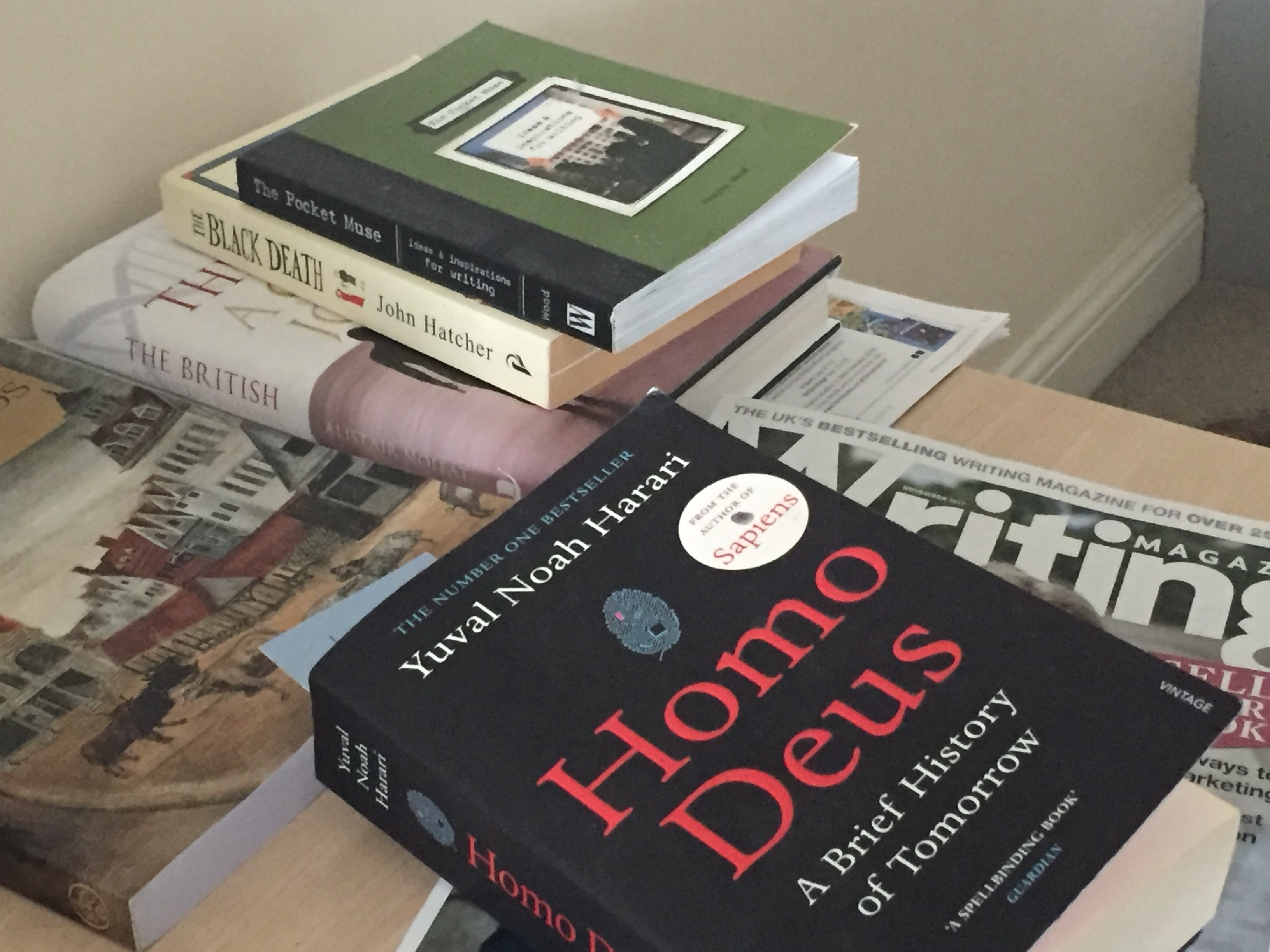
I like a walk. It keeps the dog happy and my Fitbit from nagging. Today my Fitbit sits redundantly on my arm while I contemplate the pile of books I have been looking forward to reading, but have lain gathering dust on my bedside table while other things take priority.

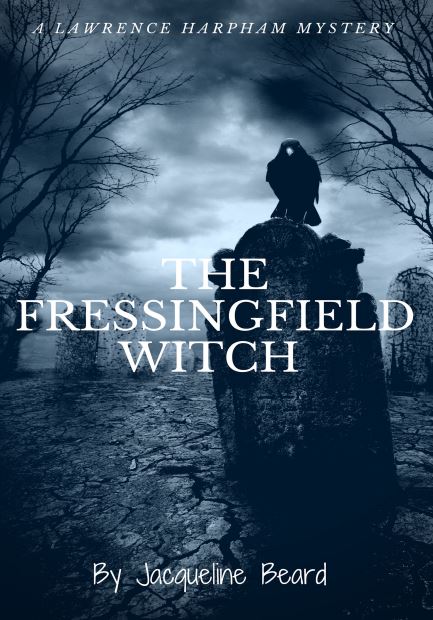
The Fressingfield Witch, is one of those other things. My latest novel is a Victorian murder mystery set in Suffolk and based on a real news item that hit the local headlines in 1890. It was an allegation of witchcraft. The news item was only short, but had an immediate impact on me. For starters, it involved one of my very distant relatives. That’s always a good lure to a genealogist. And it involved death and witchcraft, so my inner writer pricked up her ears. Before I knew it, we had conjured up a novel from this tiny eleven-lined piece of inspiration.

I’ve taken a risk with this book. The real village of Fressingfield has been populated with actual people from the 1891 census. This will be like marmite to some. They will either appreciate the idea of real people living on in print, or they will disapprove of the merging together of fact and fiction. I hope it is the former.

The final cover and finished drafts are with Publishnation and should be ready for purchase very soon. All of which gives me the rest of the week to catch up with a little light reading of my own. Unless the rain lifts and the dog demands a walk. Doing a little rain dance now…..

Front Cover snip


An Autumn Freebie…

Autumn has landed with a vengeance in my little corner of Gloucestershire.  In true Hygge fashion, I’m snuggled on the couch covered with a wool blanket, sipping a hot drink and letting the smell of cappuccino truffle waft around the room from a burning candle. The research for my next novel is almost finished; just the small matter of writing it now. Set once again in Victorian England, the new book mixes true crime and historical fiction in the blended genre of faction. Or rather it will once I’ve removed myself from the comfort of the sofa and away from cosy distractions.

In the meantime, Vote for Murder is currently free on Amazon Kindle until Wednesday 21st September. Click this link for your copy.

img_0511-2


Opium – “Mother’s Friend.”

Glass Pharmacy Bottles with old  Labels

A number of poisons are referenced in Vote for Murder, as one might expect in a murder mystery.  Mary Cage, despite her poverty, was an opium eater.  This use of drugs, among the poorest in Victorian society, might seem unlikely but opium was, in fact, readily available and extremely cheap.  To put it in context, it was possible to purchase a quarter of an ounce of opium for the same price as a pint of beer.  In East Anglia, opium was widely sold in pills and penny sticks.  In other parts of the country it was dispensed as “poppy tea.”

Opiates or laudanum, caused episodes of euphoria, but these highs were followed by bouts of depression, slurred speech, restlessness and poor concentration.  Long term use of laudanum caused addiction but there were other short term symptoms including muscular aches, abdominal cramps, nausea, vomiting and diarrhoea.

Perhaps the most concerning use of opiates, was as a ‘quietener’ for children.  Mary Cage used opium pills to subdue her children in Vote for Murder:

“…two nights with no sleep has a remembering effect and I crushed the pills down and the children lay torpid and quiet about me, as Mary Ann and James had done those many years before.”

The use of opiates to subdue children was common place in working class households. Proprietary medicines were manufactured for the express purpose of calming children.  Godfrey’s cordial, a preparation of opium, water and treacle, was known as “mother’s friend.”

With the sale of drugs unrestricted and little or no direction on how to use opiates, deaths of children were inevitable.  The article below, from the Nottingham Evening Post 22 June 1907, recounts the sad demise of Aubrey Samuel Barnes:

Nottingham Child’s Death

An inquest was held at Leen-side this afternoon touching the death of Aubrey Samuel Barnes aged ten months, whose parents live at 144, Portland Road, Nottingham.

Kate Elizabeth Frances Barnes, the mother of the child and the wife of Frederick William Barnes, lace manufacturer, said deceased had suffered from bronchitis and constipation and had been under Dr. Roberts’ treatment.  She had also given it a cordial which she obtained some time before for herself.  On the label of the bottle was inscribed, “Infants’ Cordial. Poison.”  She obtained it from Mr. J.G. Wildgoose, chemist, of Alfreton Road.  There were no directions on the bottle.  She gave the child a dose at midnight on Wednesday.  On the following day she sent for Dr. Smith, who paid frequent visits, but death took place in the evening.

Dr. Smith stated that when he saw the child on Thursday morning it was in a state of collapse from narcotic poisoning.  It was a puny infant, and had evidently suffered from bronchitis.  Witness ascribed death to bronchitis, accelerated by narcotic poisoning.  The cordial referred to contained opium. Opium was very detrimental to children under twelve months, although it was a common thing for parents to give it.  In some parts of Nottingham, the common use of laudanum amounted to an abuse.

John Wildgoose, chemist, of Alfreton Road, said that the cordial which he sold contained a preparation of opium.  A spoonful of the cordial would have about a sixth of a grain of opium.

The Coroner suggested to witness that he ought to put the prescribed dose on the label, especially as the cordial was taken by both adults and infants.

The jury found that death was due to misadventure, and expressed the opinion that the chemist should state in future on the label the amount of the dose that should be taken.

Murder & Suicide in Great Waldingfield

Great-Waldingfield-SignWhen Joshua Bowers left for work in March 1881, he did not expect to be summoned home to be told that his second wife had taken her life and murdered two of their children.  The day began like any other with Joshua walking to the farm of J Walter Hills where he was employed as a horseman. Around midday he was called back to the village to be told the awful news.

Born in Great Waldingfield, Suffolk in 1836, Joshua was the son of Peter Bowers, an agricultural labourer. He married his first wife, Emma Bird in 1859 and they moved to Upsher Green a small hamlet of red brick houses just outside the village. Their first child Henry Bird Bowers was born in 1859 and his brother Phillip Edmund Bowers followed shortly after in 1861. In 1863 Emma gave birth to her third and last child Elizabeth Sarah Bowers. The little girl died after a week and was buried on 24th March 1863. A week later Emma also died aged just 24 years.

With two small children to take care of, Joshua did not spend long looking for another partner and by May of 1864 he had married Susannah King, another resident of Great Waldingfield.

Their union produced six children, two boys and four girls. They lived together with the sons from Joshua’s previous marriage. Susannah’s health had been poor since the birth of her daughter Laura in 1880. She was both weak in body and prone to severe bouts of depression which, if treated today, might be diagnosed as post natal depression.

On Saturday 26th March 1881, Joshua Bowers left the house at about 9 o’clock to go to work. He was joined by his sons while his four daughters stayed at home with his wife. She had been complaining of a pain in her head and was lying upstairs in bed when he left.

The previous month, Susannah voluntarily admitted herself to St Leonard’s hospital in Sudbury. She had only recently come home. Her mother, Sarah King had cared for her since her return. Sarah was at the house that morning but left to collect her parochial relief just after Joshua departed. Susannah remained upstairs with the three younger girls while the eldest Elizabeth aged 13, scrubbed the floor downstairs.

Shortly after her grandmother left, Elizabeth was interrupted by her sister, 7 year old Ruth. Susannah had asked Ruth to fetch a razor to trim her corns. Elizabeth refused to let her younger sister have the razor so her mother came downstairs to collect it herself. Unconcerned, Elizabeth carried on with her chores. Moments later she heard a piercing scream coming from the upstairs bedroom.

She rushed upstairs to see two of her sisters covered in blood with their throats cut. Her mother was standing over the baby with the open razor, ready to cut its throat. Elizabeth tried to take the razor from her mother and her hands were badly cut in the struggle. She pleaded with her mother to stop but Susannah just said “Leave me alone, Lizzie”. Then she cut the throat of Laura, the youngest child. She turned towards Elizabeth who jumped from the top to the bottom of the stairs in fright.

Elizabeth’s screams alerted the next door neighbour, Mrs Carter, who ran upstairs and into the bedroom where she saw the three children with their throats cut. Susannah Bowers was still alive and walked towards Mrs Carter with her arms outstretched. Mrs Carter ran downstairs as fast as she could and ran straight into the path of another neighbour, Thomas Day, a beer house keeper.

By the time Day arrived upstairs, Susannah Bowers had cut her own throat and was dead on the bed beside her children.

Although two of the children were lifeless, Ruth Bowers was still mobile and required urgent medical attention. Mr Joseph Horsford, a surgeon of Long Melford was called and he tended to Ruth who was eventually saved. Nothing could be done for the other children who had died quickly. Susannah had cut both the trachea and jugular veins of baby Laura so her death was virtually instantaneous. The left hand jugular vein of four year old Emily was still intact so she may have lived for two or three minutes.

An inquest was held on Monday 28th March 1881 at Thomas Day’s Beer house in Great Waldingfield. It ruled the deaths of the children as “wilful murder by the mother”. A second inquest was held immediately afterwards in front of the same jury to decide on the cause of death for Susannah Bowers. The jury returned a verdict of “Temporary insanity”.

By the time of the 1881 census on 3rd April 1881, the surviving members of the family were living apart. Joshua was still living in the same cottage at Upsher Green with his eldest son Henry and his injured daughter Ruth. The other three remaining children from his marriage to Susannah King were staying with different relatives within the village. Elizabeth, who had been so brave during both the killings and as principle witness at the inquest, was living with her Uncle James Bird and Aunt Mary (nee Bowers).

On the night of the census, Phillip Edmund Bowers, second eldest son of Joshua from his marriage to Emma Bird was living with his grandparents George and Elizabeth Bird. His aunt, recently widowed Anna Maria Gallant, was also staying with her parents George and Elizabeth. Once again Joshua Bowers selected a new partner quickly and by May 1882 Anna Maria had given birth to the first of five children that she had by Joshua. Registered in the 1891 & 1901 census as his housekeeper they applied to the local vicar to marry. Under the 1835 Marriage Act it was against the law for a man to marry his deceased wife’s sister so the vicar refused the marriage and entered his decision into the parish records where it can be read today.

Joshua and Anna Maria lived together as man and wife until her death in 1902. He died in 1914 at the age of 78. Frances Ruth Bower survived her ordeal and married John Butcher in 1893. She died in 1958 at the ripe old age of 85 despite her earlier trauma. For Elizabeth Bowers, the memory of the loss of her mother and two younger sisters never left her. In 1888 she married Albert Edmund Day at Great Waldingfield. Her eldest daughter was born shortly after. She was christened Emily Laura Susannah Day.

To find out more about about this family, follow the link below

Joshua Bowers